

 17 minutes read
Let's be blunt: the old way law firms hire is a dumpster fire. You post a job, drown in a sea of “meh” resumes, and waste weeks in interviews only to find someone who needs months of hand-holding. Meanwhile, your billable hours are circling the drain.
Turns out, there’s a much smarter way to hire elite legal researchers without mortgaging your office ping-pong table. And it starts by admitting the old model is broken.

If you're still using the traditional job board approach, you're not just wasting time—you're lighting money on fire. Every day a critical research task sits idle is another day you lose case momentum. Hope you enjoy spending your afternoons fact-checking resumes and running technical interviews—because that’s now your full-time job.
The legal world has changed. The demand for legal research jobs remote has exploded, unlocking a global talent pool that most firms are completely ignoring.

The old way meant hoping the perfect candidate lived within a 20-mile radius. The new way means you hire the best person, period—no matter their zip code. It's a wake-up call for firms still clinging to their mahogany-paneled past.
The numbers don't lie. A quick search on a platform like Jooble shows a staggering 192,142 remote legal research vacancies in the U.S. alone. The average salary? A cool $88,421 per year.
For firms smart enough to adapt, this is a gold rush. By tapping into curated platforms, you can find pre-vetted paralegals with 4+ years of experience in under 24 hours. The kicker? You can slash your payroll costs by up to 80%.
This isn't about pinching pennies. It’s about building a leaner, meaner, more flexible team. Let’s talk about the real costs of that traditional hire for a second:
When you work with pre-vetted remote professionals, you get to skip the entire circus. You get instant access to someone who has already passed the background checks, aced the skills tests, and has a proven track record.
It’s the difference between trying to build a car from scratch and being handed the keys to a Ferrari. The ROI isn't just financial—it’s the strategic agility to scale your firm's capacity at a moment's notice.
The contrast is pretty stark when you lay it out.
| Hiring Metric | Traditional In-House Hiring (The Old Way) | On-Demand Remote Hiring (The Smart Way) |
|---|---|---|
| Time to Hire | 4–8 weeks (if you're lucky) | 24–48 hours |
| Cost to Hire | $4,000+ in fees and ads | $0 (you pay for the work, not the search) |
| Overhead | 30-40% on top of salary (benefits, office space) | None. Zip. Zilch. |
| Flexibility | Locked into a long-term commitment | Scale up or down as your caseload demands |
| Productivity | Weeks of ramp-up time and training | Productive from day one |
| Talent Pool | Whoever lives nearby | The best person for the job, anywhere |
So, you can stick with the slow, expensive, and risky process, or you can embrace a model that offers speed, savings, and top-tier talent on demand. For modern law firms, the choice is becoming painfully obvious.
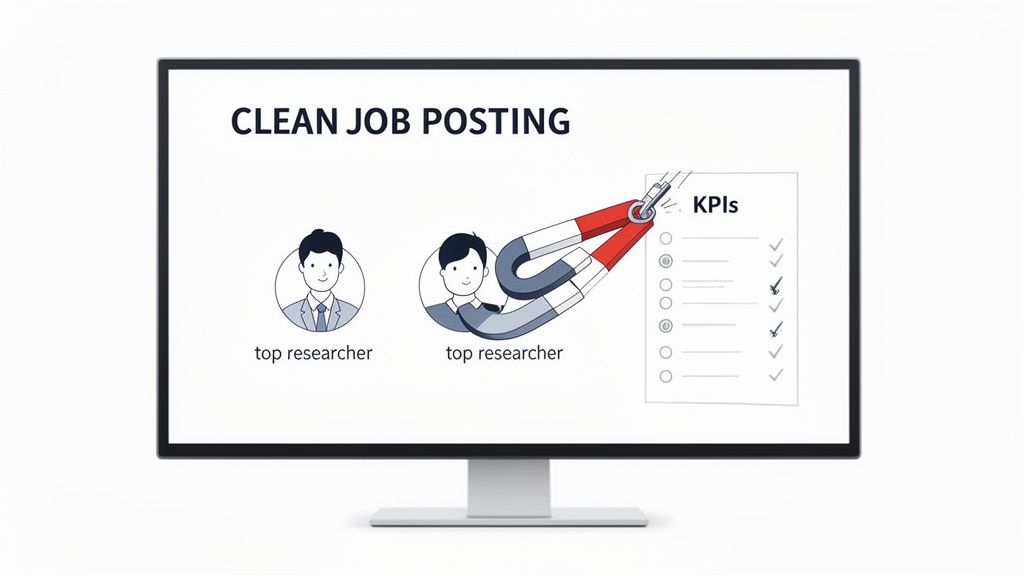
Let’s be honest. If your job description reads like a legal statute, you’re going to attract people who think reading legal statutes is a good time. You're not looking for a seat-filler; you're looking for a specialist who can unearth the one case that saves your entire argument.
So why do so many firms post the most mind-numbingly dull job descriptions imaginable? They're just a laundry list of duties copied from an old template, peppered with corporate fluff like "strong attention to detail."
That generic post attracts generic applicants. The top 10% of legal researchers—the ones who actually move the needle—will scroll right past it. They want a challenge, not a chore list.
To get the best candidates, stop listing what they have to do and start selling what they get to do. Frame the role around its impact. This isn't just another posting for legal research jobs remote; it’s a chance to be the secret weapon on a winning team.
For example, instead of this snoozefest:
Try this:
See the difference? One is a task. The other is a mission. One describes a cog in the machine; the other describes an indispensable expert.
Vague goals attract aimless candidates. Top performers, on the other hand, want to know exactly how to win. Tell them what success looks like in the first 90 days. Be brutally specific.
Ambiguity is the enemy of high performance. If a candidate has to guess what you want, you’ve already failed. The best people crave clarity because it’s the fastest path to making an impact.
Your job post should answer these questions immediately:
This approach does more than attract better talent—it pre-qualifies them. Candidates intimidated by clear metrics will weed themselves out. And that’s exactly what you want.
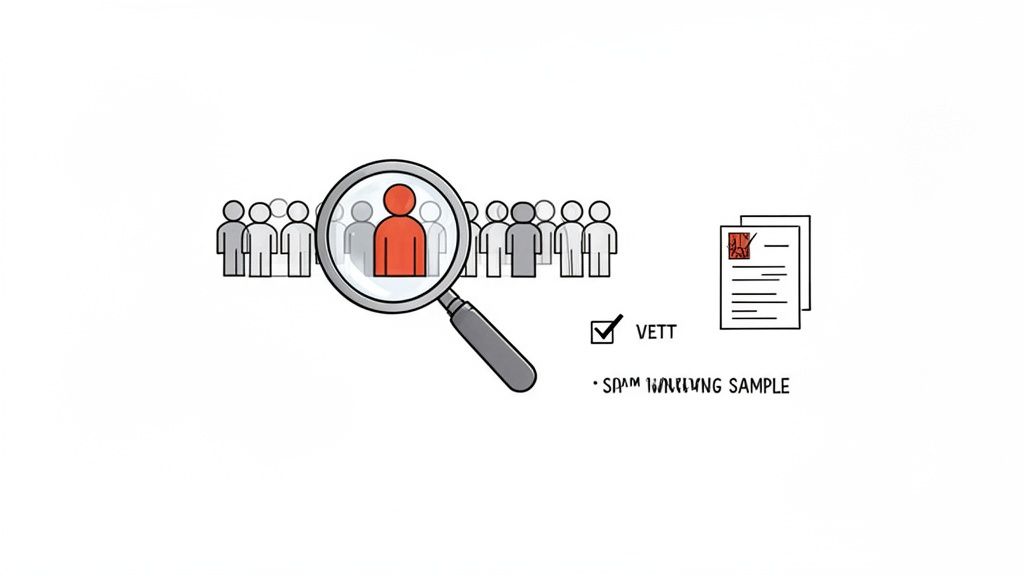
If you think the best candidates are carpeting LinkedIn and Indeed with resumes, I’ve got bad news. The elite researchers—the ones who can actually win you a case—are not wading through the swamp of a generic job board.
Posting there is like fishing with a giant net in the open ocean. Sure, you’ll catch something. But you'll spend weeks throwing back unqualified applicants and people who think "legal research" means watching Law & Order reruns. It’s a colossal time-suck.
The real talent is looking for the right opportunity, not just any job. The legal industry's shift to remote work has created a huge demand for sharp, research-focused professionals. In fact, data from the US Bureau of Labor Statistics shows a consistent need for legal pros like paralegals and researchers, and today’s tight talent market makes finding them even tougher. For a deeper dive, discover more insights about legal hiring trends on primelegalstaff.com.
This talent crunch is exactly why specialized platforms are leaving the old job boards in the dust. So, where is this hidden talent pool?
We’re talking experts who have already cleared skills tests, background checks, and interviews before you even see their profiles. It’s the difference between building a team from scratch and being handed a roster of all-stars.
For firms looking to cast an even wider net, considering partnerships with specialized staffing and recruiting agencies can be another effective strategy. They often have established networks and can act as a dedicated recruitment arm for your firm.
Ultimately, you have to decide what your time is worth. Do you want to screen resumes, or do you want to practice law? Ditching the crowded pond of generic job boards for curated talent pools is the fastest way to find a remote legal superstar who can deliver value from day one.
If you're serious about finding top-tier talent, you can explore a wide range of vetted professionals actively seeking remote law jobs by visiting our curated listings.
A slick resume can hide a multitude of sins. Anyone can claim to be a “detail-oriented self-starter,” but when a partner is breathing down your neck for a case-critical memo, those buzzwords are worthless. This is where you get ruthless.
You need a battle-tested vetting process that separates the true performers from the merely good interviewers. Because if you get this wrong, you're not just hiring the wrong person—you're signing up for months of costly mistakes. This isn’t just about filling another legal research jobs remote role; it’s about de-risking your hiring.
A clean background check just tells you they haven't been caught. It says nothing about their ability to think. Your checklist needs to be far more rigorous.
Here’s what you should be digging into:
This isn't about being difficult; it's about being diligent. A little extra effort here saves you a world of hurt later.
The goal isn't to find someone who knows all the answers. It's to find someone who knows how to find all the answers, quickly and accurately, without needing their hand held. That’s the entire point of hiring a specialist.
A structured process is your best defense against a bad hire. Here’s a checklist to keep you honest.
| Vetting Stage | What to Look For | Red Flags |
|---|---|---|
| Initial Screen | Resume clarity, relevant experience, proficiency in core platforms (Westlaw, LexisNexis). | Vague duties, job-hopping without explanation, typos. |
| Skills Test | Performance on a timed, real-world research hypothetical. Quality of analysis, citation accuracy. | Inability to follow instructions, superficial research, missing the deadline. |
| Writing Sample | Logical flow, persuasive arguments, and professional tone from their skills test. | Overly academic writing, weak structure, unsupported conclusions. |
| Interview | Depth of answers to behavioral questions, problem-solving ability, cultural fit. | Canned answers, blaming former employers, no curiosity. |
| Reference Check | Feedback on reliability, communication, and ability to handle pressure from former supervisors. | Hesitation from references, generic praise, or unreturned calls. |
Sticking to a checklist like this removes bias and ensures every candidate is measured against the same high standard.
Standard interview questions get standard, rehearsed answers. Ask questions that force candidates to think.
Try these:
These questions aren't about tricking anyone. They're about simulating real pressure to see who can handle the heat. You're trusting them with the foundation of your legal arguments. Choose wisely.
So you’ve hired a remote legal research superstar. Don't pop the champagne just yet. Finding them was half the battle; integrating them is the other half. Fumble this, and all that hard work goes right out the window.
You can’t just throw a laptop at someone and expect magic. Managing a remote team requires intention. It’s about building a system of communication and accountability that fosters productivity without turning you into a full-time Zoom babysitter.
This isn’t just about filling one of the many legal research jobs remote roles available; it’s about setting your new hire—and your firm—up for a win from day one.
Forget the fancy project management software with a million features you’ll never use. You need a simple, bulletproof tech stack that keeps everyone on the same page and your data secure.
Here’s the bare-bones setup:
A robust remote work phone system is also crucial for ensuring clear and reliable client communication. It’s a small investment that pays off big in professionalism.
The biggest mistake firms make is trying to replicate the in-office environment remotely. It doesn’t work. You need new rules for an asynchronous world.
The goal isn't constant contact; it's clarity and trust. If you have to ask someone if they're working, you've either hired the wrong person or you’ve built a terrible system. Probably both.
Establish a clear rhythm. A daily morning check-in on Slack and a weekly 30-minute video call is often all you need. Set expectations around response times—like a two-hour window on Slack and 24 hours for non-urgent emails. This gives your team focused time to do deep work. It’s about accountability, not availability. For a deeper dive, our guide on how to onboard remote employees provides a detailed playbook.
Alright, let's talk money. We've walked through how to find, vet, and manage top remote talent, but what’s the actual cost, and is it worth it? The short answer: hell yes. The longer answer is that the numbers don't just work; they can completely change the economics of your practice.
When you compare a full-time, in-house hire to a flexible, on-demand remote professional, the math is brutally one-sided. An in-house hire is so much more than a salary. You tack on benefits, payroll taxes, office space, and equipment, which easily bloats your total cost by an extra 30-40%. With a remote professional from a managed platform, you get a straightforward flat rate. That’s it.
Let's be real—nobody goes to law school to become an expert in multistate employment compliance. The moment you hire someone in another state, you unleash a tidal wave of regulatory headaches. Tax withholding, workers' comp, unemployment insurance… it's a full-time job in itself.
This is where a managed platform earns its keep. It handles all that messy backend stuff for you. Instead of trying to navigate cross-border tax law, you just get a clean invoice. It completely de-risks the process. If you want a glimpse into the complexities you’re sidestepping, you can learn more about what payroll compliance entails and breathe a sigh of relief.
This isn't just about saving money. It's about buying back your time and sanity. You get to focus on practicing law, not becoming an amateur HR expert.
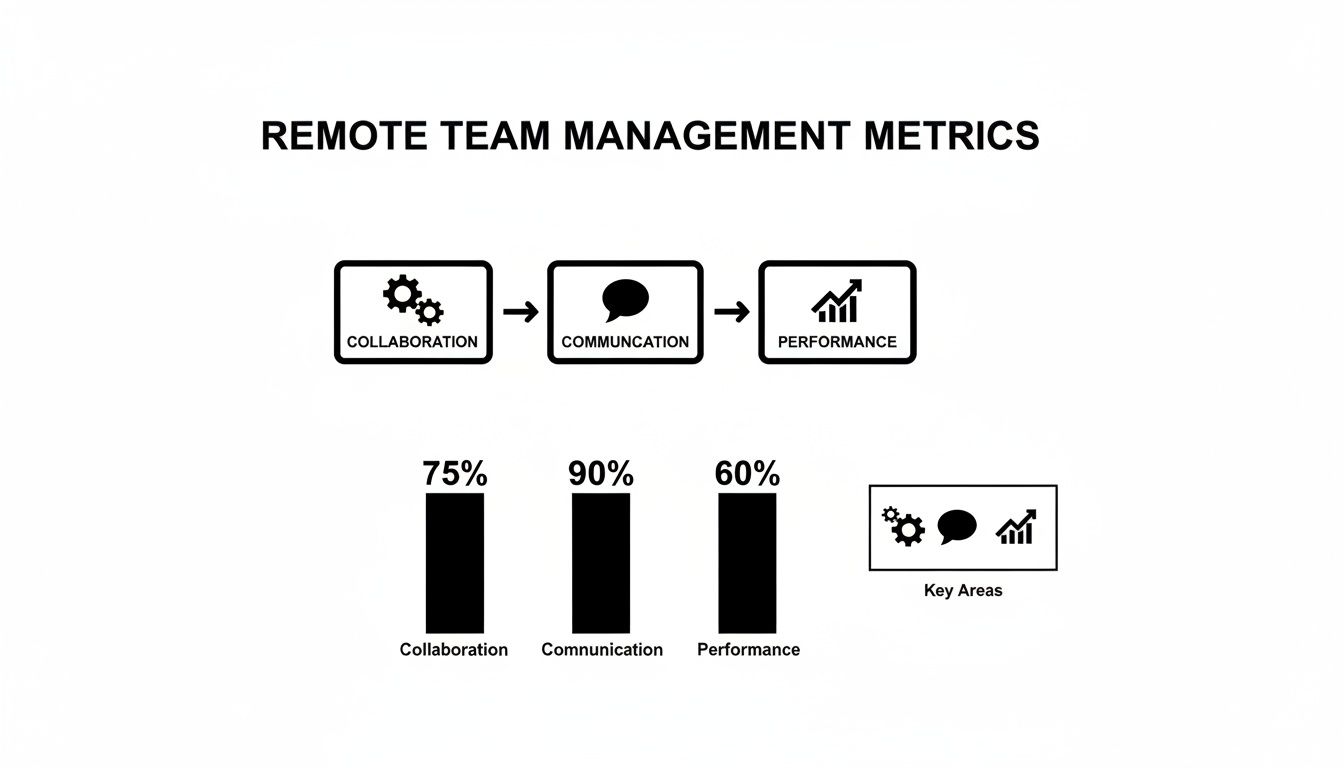
The data is clear: firms that nail remote team management see a direct impact on efficiency and work quality.
The true return on investment goes far beyond cutting overhead. While the payroll savings can be massive—sometimes up to 80%—that’s just the start. The real value is strategic.
Think about what this flexibility really means:
This isn’t just an operational upgrade; it’s a competitive advantage. While your competitors are stuck in a three-month hiring cycle, you’re already delivering results. That’s the real ROI of embracing modern legal research jobs remote.
I get it. Shifting from a traditional team to hiring remote legal researchers can feel like stepping into the unknown. Let's tackle the questions I hear most often.
This is the number one concern, and for good reason. The answer is a layered security strategy. It starts with your tech stack. Operate out of a secure, cloud-based practice management system with role-based access. This ensures your researcher only sees what they absolutely need to.
Next, control the hardware. Insist that all work is done on a firm-provided computer or a secured personal device connected through a VPN. No exceptions. Finally, a comprehensive confidentiality agreement and a clear remote work policy are your backstops. Reputable platforms often pre-vet professionals on these protocols, giving you an extra layer of confidence.
It's not even a close comparison. A traditional employee costs 30-40% more than their base salary once you factor in benefits, taxes, office space, and equipment.
With a remote professional sourced through a platform, you're looking at a straightforward flat rate. This simple change can slash your payroll and overhead expenses by as much as 80%. It’s a game-changer for accessing elite talent without the heavy financial burden.
This is about communication discipline, not geography. First, establish a few core hours where everyone’s schedules overlap for real-time collaboration.
Then, master your communication tools:
The good news is that most experienced remote professionals are already experts at aligning with US business hours. It just comes down to creating a clear communication plan instead of assuming everyone is available all the time.


