 21 minutes read
You’re probably here because work showed up faster than capacity did.
A case blew up. Discovery got ugly. A partner vanished into trial prep. Or your associate pipeline is doing that fun thing where everyone is “promising” to catch up next week. So you started looking at an hourly rate contract attorney and got the usual nonsense. One quote looks cheap, another looks insane, and nobody explains what you’re buying.
I’ll save you the polite dance. Most firms overpay because they hire by title instead of by task. They throw attorney-level dollars at work that doesn’t need attorney-level talent, then act surprised when margins get skinny. That’s not a staffing problem. That’s a management problem.
Used correctly, contract attorneys are not just overflow help. They’re a margin tool. Used badly, they’re an expensive bandage with a LinkedIn profile.
A partner gets hit with a rush motion, a pile of discovery disputes, and a client who wants daily updates. Someone says, “Just get a contract attorney.” Fine. Then the quote lands, and now you have a staffing decision that can either protect your margin or wreck it.
The rate range is wide for a reason. In the U.S., contract attorney hourly rates often fall between $75 and $350, with niche experts reaching $400+ according to market data on contract attorney hourly rates. That number matters, but it is only half the picture. The firms that keep more profit do not stop at attorney pricing. They separate attorney work from process work and push the second category to lower-cost support, including remote paralegals, before they approve a single premium legal hour.
That is where firms either keep control or start lighting money on fire.

Stop treating “contract attorney” like a single product. It is a bucket full of very different work, and the price swings with the task.
Those bands are useful. They also tempt firms into a lazy habit. They hire the expensive title first, then figure out the workflow later.
Do it the other way around.
If a matter needs legal judgment, buy legal judgment. If it needs organized execution, document handling, cite checking, chronology building, intake cleanup, or production support, use a lower-cost operator. A remote paralegal can carry a surprising amount of that load for far less than attorney rates, which means your contract attorney spends time only where attorney judgment earns the fee.
The spread between what contract lawyers earn and what firms bill is the entire point of this model. The same source reports an average U.S. contract attorney earning of $57.30 per hour, or $119,188 annually as of April 2026, while firms may bill that time at much higher rates, including $500+ per hour in some matters.
Keep that spread for your firm. Do not hand it away by staffing simple work with expensive people.
A small example makes the point. The same source gives a scenario where a firm pays a contract attorney $1,000 for 8.5 hours, roughly $118 per hour, and bills the client $200 per hour, producing $1,700 in revenue and $700 in profit.
That is decent.
It also is not optimized.
If part of those 8.5 hours is administrative cleanup, exhibit organization, document management, or routine drafting prep, your margin improves the second that work moves off the attorney’s desk. This is the founder’s playbook: use contract attorneys for analysis, strategy, and drafting that carries risk. Use remote paralegals for repeatable support work. That is how you create profit arbitrage instead of just renting a résumé.
Yes, expensive markets still charge expensive rates. The same source notes average lawyer rates in places like California at $344 and DC at $392, with contract pricing generally running higher in those environments.
Do not let geography make the staffing decision for you.
If the work can be done remotely, supervised properly, and broken into judgment work versus support work, local pricing becomes a choice, not a law of nature. Plenty of firms overpay because they assume every hour must be bought in their own market. It does not.
If you want a cleaner view of what lawyers themselves earn before your markup, recruiter markup, and platform packaging get layered on top, review this breakdown of how much contract attorneys make.
A partner needs help on a motion, a pile of document review, and a stack of filing prep. The firm hires one contract attorney at one blended rate and sends everything to that person. Margin dies right there.
Rates are driven by mismatch more than mystery. Firms overpay when they buy attorney time for work that does not require attorney judgment. If you want profit, separate high-risk legal work from process work and price each lane on purpose.

The strongest rate driver is the consequence of getting the work wrong.
A contract lawyer handling a dispositive motion, hearing prep, witness outlines, or nuanced regulatory analysis should cost more. The work carries judgment risk. You are paying for speed, precision, and fewer ugly surprises.
Routine work belongs in a different bucket. Process-driven drafting support, cite checks, exhibit organization, document management, and litigation support should not be priced like bespoke legal analysis. If you pay premium attorney rates for repeatable work, that is not staffing. That is a margin leak.
Analysts at this rate stratification guide break the market into lower-cost entry-level work, mid-range generalist work, and premium specialist work, while also noting a high national average lawyer hourly rate. The practical takeaway is simple. Do not buy specialist pricing for work a trained support team can handle.
Firms love to ask for “five to ten hours a week” and then act offended by the quote.
Low-hour engagements are expensive because the contractor still has to absorb your workflow, style preferences, systems, matter history, and revision habits. The same guide also notes that sub-15-hour arrangements often come with a premium. Of course they do. Fragmented work is harder to schedule, harder to forecast, and easier to disrupt.
If your need is real, bundle the work. Give the contractor enough volume to matter. If your need is sporadic, stop pretending you are buying efficiency by the hour. You are buying interruption.
You cannot set the market. You can stop making yourself expensive to serve.
Focus on these variables:
A low number on an invoice means nothing if a partner has to rewrite the draft, rebuild the record, or chase the contractor for missing pieces.
Use a blunt test. Ask whether the person can complete the assignment with limited supervision and within your risk tolerance. If not, the rate is too high even when it looks cheap.
That is the founder’s playbook. Buy legal judgment where it matters. Move repeatable support work to lower-cost talent. The firms that get this right do not just reduce cost. They create spread.
There are three common ways to bring in temporary legal help. None is perfect. One is usually wrong for your situation. Another is tolerable. The third tends to be the most efficient if you care about speed and sanity.
This is the direct independent contractor route. You find someone yourself, negotiate directly, and skip the middle layer.
Good news first. It can be lean. You may get better visibility into the person’s real rate, real experience, and actual availability. You also avoid a lot of markup fog.
Now the bad news. You become the recruiter, screener, reference checker, onboarding manager, invoice reviewer, and occasional therapist. If the person flakes, underdelivers, or disappears right before a deadline, there’s no bench behind them. There’s just you, glaring at your inbox.
This model works best when you already know the contractor or you have the internal discipline to manage independent talent properly.
Traditional staffing agencies still exist because they solve one problem well. They can produce bodies quickly.
That’s also where the romance ends.
Agencies often add opacity. You get a candidate, a rate, and very little insight into how much of that money is going to the professional doing the work versus the machine around them. You may also get limited flexibility on process, communication, and fit. You’re paying for convenience, but sometimes you’re mostly paying for somebody else’s margin.
If you need a one-off placement and don’t care about cost transparency, fine. If you’re building a repeatable operating model, this gets old fast.
The platform model sits between freelance chaos and agency bloat. Think curated marketplace, not resume dump.
You get pre-vetted talent, faster matching, and more visibility into skill alignment. In the better versions of this model, you also avoid spending your week sorting through people who sound great until they touch a real file.
That doesn’t mean every platform is good. Some are just slicker agencies with nicer logos. You still need to ask how vetting works, who checks writing quality, how replacements are handled, and what happens when scope changes.

You’re not buying a profile. You’re buying reduced hiring risk.
Here’s the blunt version:
If you go the independent route, don’t wing the payment side. Contractor admin gets messy fast if your process is stitched together with spreadsheets and optimism. This guide on how to manage and pay 1099 contractors is a practical resource for getting the back office right.
A partner lands a new matter, quotes a healthy fee, then hands half the work to an expensive contract lawyer because the team is stretched. The file gets done. The client is happy. The margin is mediocre.
That is a staffing mistake, not a pricing problem.
The firms that keep more profit do one thing better. They split legal judgment from legal production and buy each at the right price. If you want a benchmark for hourly lawyer rates by role and experience, start there, then work backward from the work itself.
A common model is straightforward. Firms pay a contract attorney a percentage of what the client is billed, often around 35% to 40% of the project value, as described in this overview of contract attorney rate structures.
That sounds reasonable until you assign attorney-priced labor to work that never needed an attorney in the first place.
The same source points to the bigger profit play. Lower-cost support, including remote paralegals, can handle large blocks of process-driven work while preserving far more of the fee. That is not corner-cutting. That is competent matter management.
Use a 20-hour project billed to the client at $350 per hour. Revenue is the same in each scenario. Profit changes based on who does the work.
| Hiring Scenario | Hourly Cost to Firm | Total Cost (20 hrs) | Total Revenue (20 hrs @ $350) | Net Profit |
|---|---|---|---|---|
| Senior contract attorney for complex motion | $250 | $5,000 | $7,000 | $2,000 |
| Junior contract attorney for research and drafting | $125 | $2,500 | $7,000 | $4,500 |
| Remote paralegal for discovery support and case management | $60 | $1,200 | $7,000 | $5,800 |
Same matter value. Very different economics.
This is why so many firms stay busy and still feel squeezed.
A senior contract attorney earns the rate on high-risk drafting, strategy, dispositive motions, and specialized analysis. Pay for judgment when judgment is the product.
A junior contract attorney is often the right buy for research-heavy work, first drafts, cite checks, and issue spotting that still requires a lawyer's training but not a veteran's billing profile.
A remote paralegal is usually the best economic decision for discovery organization, file assembly, deadline tracking, case management, document handling, and other repeatable execution work. If the task follows a process, stop staffing it like a bet-the-company hearing.
Put the highest-cost professional on the narrowest slice of work that truly requires that level of judgment.
Do that consistently and your margin improves without touching your client rate.
Here is the play. Use contract attorneys for legal judgment. Use paralegals for production. Build your workflow so attorney time is reserved for review, strategy, and final accountability.
That is where profit arbitrage lives.
Traditional firms overpay because they treat all backlog as lawyer work. Smart operators treat the file like a production system. They map the work, assign each task to the lowest-cost qualified role, and protect partner time for decisions that clients will pay for.
If you want to tighten the model further, it helps to explore different pricing models for legal services and align staffing with how the matter is billed. Firms that do this well stop buying prestige by the hour and start buying output with margin attached.
Most firms negotiate badly because they focus on the number instead of the package.
You don’t get the best rate by saying, “Can you do less?” You get the best rate by making the work easier to accept, easier to schedule, and easier to rely on. Contractors discount uncertainty. They don’t discount competence.
Start with stability. A contractor will often take a more reasonable rate for predictable work than for a stop-start mess that hijacks their calendar.
Focus on critical areas that matter:
Say it plainly: “We’re looking for a partner, not a vendor. If this starts well, we want repeat work under a predictable cadence.”
That lands better than haggling over five bucks an hour like you’re at a flea market.
Some lines work because they frame value correctly.
“We can offer consistency, clean scope, and prompt payment. Price this as a steady relationship, not a one-off emergency.”
Try a few like these:
That’s negotiation. Calm, specific, and based on business reality.
A fuzzy engagement letter is how small billing annoyances become large resentments.
Include these items every time:
If you need a benchmark for how outside legal rates compare more broadly, this overview of hourly lawyer rates is useful context before you negotiate your own contractor terms.
One final thing. Stop announcing urgency before you’ve agreed on price.
The second you signal that you’re desperate, the market hears “premium.” Keep the tone calm, the ask specific, and the opportunity framed as stable, organized, and worth prioritizing. You’ll get better numbers and better behavior.
A client dumps a messy matter on your desk at 4:30 p.m. You need legal judgment on two issues, document cleanup on fifty files, and someone to keep the workflow from stalling all week. Firms that hire one expensive lawyer for all of it torch margin for no reason. Smart firms split the work and keep the profit.
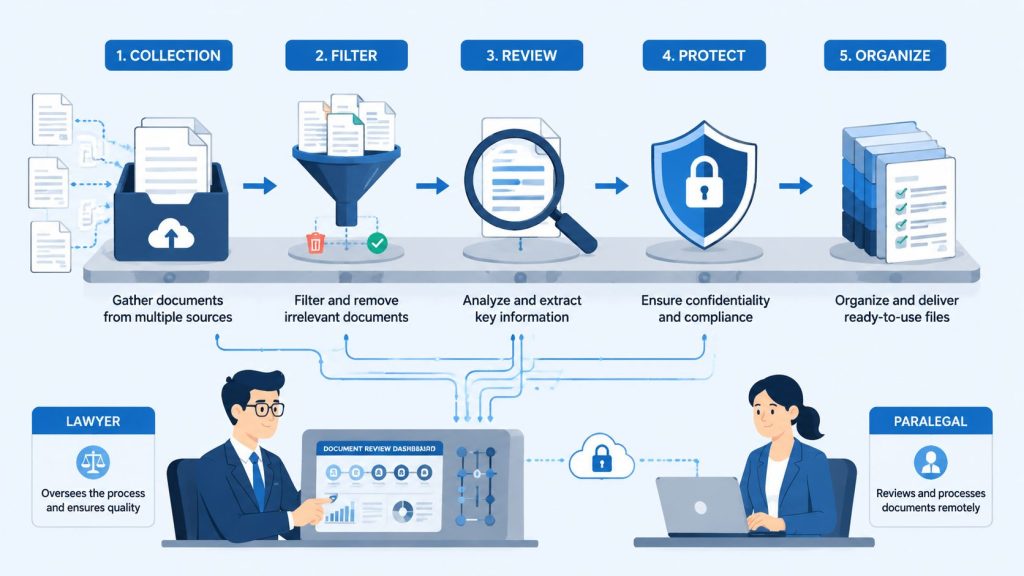
That starts with staffing by task, not ego. Use attorneys for analysis, strategy, negotiations, and high-risk drafting. Use paralegals and legal support for the repeatable work that buries your licensed talent and inflates your labor cost.
Analysts at Attorney at Work’s rate analysis found a wide gap between what contract attorneys earn and what traditional firms bill clients. That gap matters, but only if you assign the work correctly. If you put attorney-rate labor on administrative or process-heavy tasks, you destroy the arbitrage that makes an on-demand model worth building.

My recommendation is simple. Keep a small core team in house, then build a bench around it.
That model protects margin because you stop paying premium rates for work that never needed premium talent.
A polished résumé does not fix a bad staffing decision.
What fixes it is work mapping. Break every matter into components. Identify where legal judgment is required, where process discipline is enough, and where speed matters more than pedigree. Then assign each part to the lowest-cost qualified person who can produce clean work on time.
That is how disciplined firms increase profit without increasing chaos.
Good contractors do not disappear because remote work is flawed. They disappear because firms are disorganized.
Give them one point of contact. Give them a defined workflow. Pay on time. Through that same analysis, Attorney at Work also points to the advantage of faster staffing and lower payroll burden when firms use vetted remote professionals. You get that upside only when your operating habits are tight enough to keep solid people coming back.
There is also a practical point many firms ignore. Independent professionals are running a business, not waiting around to rescue yours. If you regularly hire freelancers, understand the basics they deal with, including health insurance for independent contractors. That awareness makes you a better buyer of talent and a more attractive client.
The old approach is expensive and fragile. Firms hire full-time before demand is stable, then carry underused payroll when the work slows down.
A modular team fixes that. Keep the core team lean. Add attorneys only where judgment justifies the rate. Fill the rest with trained support that can absorb volume without blowing up your cost structure. If you want a practical example of that setup, review this model for on-demand lawyers and legal staffing.
That is how you build an on-demand legal team without drama. Clear roles, clean process, and zero confusion about which tasks deserve attorney rates.
Start with the task, not the title. If the work requires legal judgment, legal analysis, or substantive drafting that needs attorney oversight from the start, use a contract attorney. If the work is process-heavy, document-heavy, administrative, or repeatable with clear instructions, a paralegal is often the sharper business decision.
The expensive mistake is upgrading every task to attorney status just because the file feels important. Most files contain a mix of work. Staff the mix accordingly.
No. Hourly is familiar, not automatically smart.
Hourly works well when scope is uncertain or the matter may change quickly. Flat-fee arrangements can work better when the deliverable is tightly defined and you want cost certainty. The key is scope clarity. If nobody can define the output, hourly is safer. If everybody knows exactly what “done” means, flat fee can remove a lot of friction.
Use process, not hope.
Give one point of contact. Provide a sample of prior work product. Set formatting and citation expectations. Define turnaround times. Start with a contained test assignment before handing over something mission-critical. Review early output quickly so corrections happen on page three, not after twenty pages of confident nonsense.
Remote work isn’t the quality problem. Sloppy onboarding is.
Generally, firms can bill for contract work, but your billing practices must comply with your jurisdiction’s ethical rules and your client agreement. Be transparent where required, supervise the work appropriately, and make sure the fee charged to the client is supportable.
This is not the place for improvisation. If your jurisdiction has specific guidance, follow it.
They confuse availability with fit.
A fast yes from a contractor means very little if the person isn’t right for the assignment. The next biggest mistake is poor scoping. Firms send broad, messy instructions, then blame the contractor when the result is broad and messy right back.
Judge the rate against four things: complexity, supervision required, urgency, and consistency of work. A fair rate for a high-skill, low-supervision contractor on specialized work can look expensive and still be a bargain. A low rate for someone who needs constant cleanup is not cheap.
Ask yourself one blunt question. If I hire this person at this rate, how much partner or senior associate time will I spend managing the result? That answer usually tells you whether the quote is fair.
Keep it practical.
If the answers are vague, the engagement will be too.
Sometimes yes. Sometimes no.
If your workload is volatile, seasonal, or heavily matter-dependent, on-demand support can cover a surprising amount of ground without locking you into permanent overhead. If the work is constant, relationship-heavy, and central to firm operations, a full-time hire may still be the right call.
The trick is not choosing one religion forever. Build a system that uses both.
If you’re done overpaying for legal support and want a faster way to build a flexible bench, HireParalegals is built for U.S. law firms that need vetted on-demand paralegals, legal assistants, junior attorneys, and other remote legal professionals without the usual hiring drag.