 17 minutes read
You've got attorneys buried in deadlines, a case load that didn't get the memo about staffing limits, and a hiring process that feels like punishment. Resumes pile up. Interviews drag. The “great candidate” can't manage a filing calendar without hand-holding. Meanwhile, the work keeps coming.
That's why remote paralegal jobs matter now. Not because remote work is trendy. Not because everyone likes Zoom backgrounds. Because the old office-only hiring model is slow, expensive, and weirdly bad at finding people who can keep a legal team moving.
I've built remote legal support into real workflows, not fantasy org charts. My view is simple. If your firm still treats in-office proximity as a proxy for competence, you're making staffing harder than it needs to be. Good paralegals don't become good because they sit ten feet from your office door. They become good because they can manage details, think ahead, communicate clearly, and use the right systems without breaking your process.
You know the scenario. A matter heats up. Discovery expands. Calendars get ugly. Someone says, “We need another paralegal,” and suddenly the firm is trapped in the usual mess of job posts, mediocre applicants, and scheduling interviews with people who looked polished on paper and underwhelming on camera.
That old myth still lingers. The one that says legal support has to happen in a cubicle, under fluorescent lights, with stacks of binders nearby. It's outdated. Legal work is already digital, deadlines already live in software, and court systems already run through portals, uploads, and document workflows. Pretending otherwise is just nostalgia with overhead.

The market has already moved. Estimates suggest two out of three or more law firms have already used virtual paralegal support, and the share of self-employed paralegals grew from 3% in 2020 to roughly 5% by 2022, representing up to 20,000 independent professionals, according to this U.S. virtual paralegal industry overview.
Most firms don't have a talent problem. They have a filtering problem.
They post a vague role. They ask for “detail-oriented self-starters.” They wait. Then they spend days sorting through applicants who may be smart, but aren't right for the exact procedural and tech-heavy work the role demands. Hope you enjoy spending your afternoons fact-checking resumes and turning your practice into an accidental recruiting agency.
Here's the more useful way to think about remote paralegal jobs:

Practical rule: If a candidate only looks strong when you imagine “training them up in person,” they're probably not strong enough.
A world-class team member does not need to be in the next cubicle. They need to know how to keep a matter organized, move documents correctly, protect deadlines, and keep attorneys from getting blindsided.
That's the shift. Remote paralegal jobs aren't some backup option anymore. They're a staffing strategy. Firms that understand that are building faster, leaner, calmer teams. Firms that don't are still arguing about badge access while someone misses a filing detail.
Let's talk money, because financial considerations often cause the romance for “local only” hiring to fall apart.
The median annual wage for paralegals and legal assistants was $61,010 as of May 2024, according to the BLS-based salary breakdown covered by Virtual Vocations. That same source notes that specialized senior remote roles can command $100,000 or more, and some commercial litigation positions in Denver offer $120,000 to $140,000. Translation: expertise has a price tag, and it should.
That's not bad news. It's useful news. It means the actual question isn't “Can we hire remotely for less?” The core question is “Where should we pay a premium, and where are we overpaying for geography instead of skill?”

A lot of firms still make this mistake. They compare one local full-time hire to one remote full-time hire as if those are identical categories. They aren't.
Remote hiring lets you be sharper about what the role needs. If you need a paralegal who can handle day-to-day litigation support, file organization, drafting support, and deadline management, you don't need to chase the most expensive candidate in the most expensive city. If you need senior e-discovery judgment or commercial litigation depth, then yes, you should expect the number to rise.
Here's the cleaner way to frame it:
| Role type | What you should optimize for | Compensation reality |
|---|---|---|
| General support role | Reliability, organization, drafting accuracy, workflow discipline | Often closer to median benchmarks |
| Specialized litigation role | Docketing precision, discovery management, court procedure fluency | Commands a premium |
| Senior strategic support | E-discovery, complex matter management, autonomous execution | Often priced like high-end legal ops talent |
That distinction matters because too many firms throw senior-level compensation at tasks that really call for a well-run systems person. That's not staffing. That's panic-buying.
The savings conversation gets oversimplified fast. It's not just “remote means cheaper.” Sometimes it doesn't. Sometimes the right remote paralegal is expensive, and worth every dollar.
The better economics come from fit.
If you pay for true expertise, you usually get speed, fewer mistakes, and less attorney cleanup. That's where profitability hides.
Stop trying to “save money” in the abstract. Start buying the right level of legal support for the right slice of work.
If the role is process-heavy and repeatable, hire for systems fluency and reliability. If the role touches high-risk litigation, federal procedure, or document-intensive matters, pay up for scar tissue. The expensive hire is the one who looks affordable until a deadline slips, a filing gets bounced, or an attorney has to redo half the work.
Remote paralegal jobs give firms more room to make that distinction properly. That's the win. Not cheap talent. Better staffing math.
A remote paralegal who “knows Microsoft Office” is not a hiring win. That's a baseline life skill.
Success in remote paralegal jobs depends on proficiency with Westlaw, LexisNexis, and e-filing systems, because those tools replace the physical file-handling and hallway coordination of office work. A paralegal certificate often serves as the minimum educational threshold, as noted in this overview of remote entry-level paralegal requirements.
If I'm hiring for a remote legal support role, I want proof of competence in four buckets.
For case management software, I'd also screen for familiarity with systems like Clio or MyCase. If you're rethinking your setup, this no-BS guide to legal case management software picks for 2025 is a useful shortcut.
Don't ask whether they're “comfortable with technology.” Everyone says yes. Ask them to walk you through a real workflow.
Try prompts like these:
Strong remote paralegals explain process clearly. Weak ones explain personality.
The firms that get the most from remote legal support don't just hire better people. They reduce repetitive document work so those people can focus on judgment-heavy tasks.
If your team still rebuilds the same forms and templates by hand, read this guide to automating legal paperwork. It's useful because it deals with the actual bottleneck. Too many firms hire a good paralegal, then waste that person on administrative copy-paste nonsense.
My view is simple. Hire for legal judgment, process discipline, and software fluency. Then build a stack that lets that person move. If your systems are clunky, even a strong hire will look average.
Posting on giant job boards and waiting for magic is not a strategy. It's a digital suggestion box.
Yes, you'll get applicants. Plenty of them. You'll also get people who clicked “easy apply” from three countries, four time zones, and six unrelated careers away. Then your office manager becomes a part-time detective, your associate becomes an involuntary screener, and your hiring pipeline starts making sad little honking noises. Toot, toot.

This is the gotcha that wastes everyone's time. Approximately 60% of advertised remote paralegal jobs require a U.S.-accredited paralegal certificate and knowledge of specific state court procedures, a barrier that many job boards fail to make clear for international applicants, according to this recruitment analysis of remote paralegal job eligibility.
That one fact explains a lot of hiring chaos.
A remote role can be fully virtual and still be functionally U.S.-restricted. The candidate may need U.S.-specific training, state procedure familiarity, or direct experience with local filing rules. If your posting doesn't say that plainly, you'll attract the wrong pool and blame the market when the issue was your own vagueness.
I'm biased toward curated pipelines because I've seen the alternative. Mass-market platforms are fine if you need volume. They are lousy if you need judgment.
Here's the practical sourcing hierarchy I'd use:
If you want a narrower pool of legal support candidates instead of the usual applicant flood, this paralegals-for-hire marketplace view is the kind of specialized sourcing route that makes more sense than posting into the void.
The goal isn't more applicants. It's fewer wrong ones.
I care less about polished self-descriptions and more about operational behavior. A good remote paralegal usually shows the same signals:
One more opinion, since we're being honest. If your interview process doesn't include a realistic skills assessment, you are guessing. In legal support hiring, guessing is a very expensive hobby.
Cross-border hiring scares law firms for one reason. Nobody wants a simple staffing decision to turn into a tax mess, a misclassification problem, or a panicked email from finance asking why a contractor agreement doesn't match reality.
Fair concern. Still manageable.
The biggest mistake I see is treating international hiring like a casual side project. A firm finds talent in Latin America, gets excited about the timezone overlap, and jumps straight to “great, let's pay them somehow.” That “somehow” is where trouble starts. Worker classification, local labor rules, confidentiality obligations, payment mechanics, and supervision standards all need clean handling.
Most compliance problems come from sloppy assumptions, not sinister intent.
Here are the usual offenders:
A general HR overview like GENTY's guide for hiring compliance is worth reading because it forces the right questions before you make promises you can't operationally support.
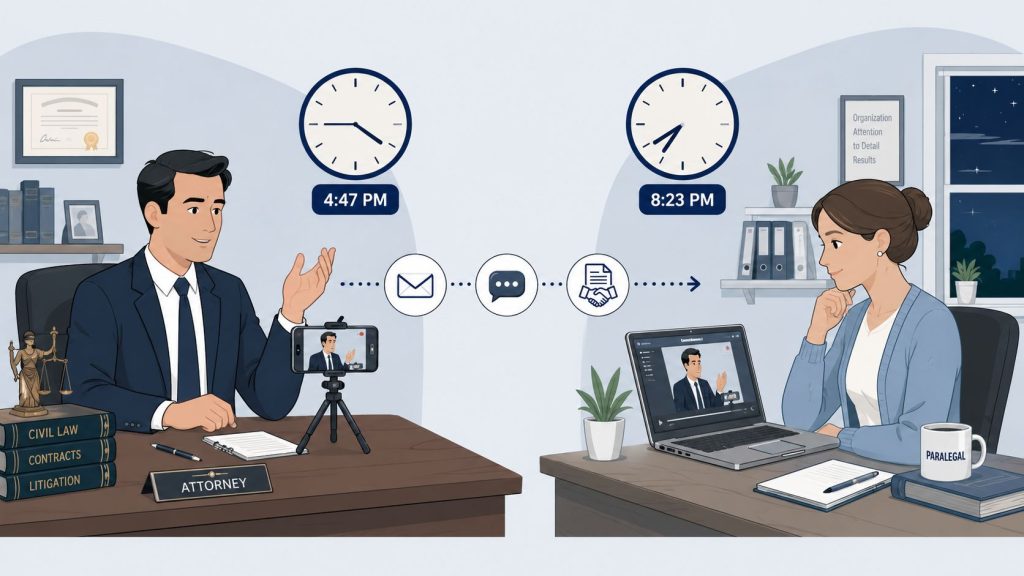
Latin America is appealing for obvious reasons. Strong timezone alignment with U.S. teams. Good English fluency in many candidate pools. Easier day-to-day collaboration than hiring twelve time zones away and pretending asynchronous chaos is a virtue.
But this only works when the operating model is clear.
| Decision area | Bad approach | Better approach |
|---|---|---|
| Classification | Pick contractor status because it sounds simple | Match status to actual control, schedule, and work structure |
| Payment | Improvise after the hire starts | Set payment method, cadence, and documentation before onboarding |
| Confidentiality | Rely on verbal expectations | Use written agreements and secure systems |
| Workflow | “We'll figure it out” | Define reporting lines, tools, deadlines, and approvals |
Hire globally if you want. Just don't manage globally like an amateur.
Use a partner or process that understands legal staffing and cross-border compliance. That doesn't mean you need bureaucracy for sport. It means someone needs to own classification logic, payments, documentation, and onboarding consistency.
If your firm is exploring international legal support, this online legal jobs resource is the type of practical starting point that helps map the hiring path without pretending compliance takes care of itself.
The “$500 hello” problem is real. One quick payment, one informal agreement, one rushed start date. Suddenly the relationship exists before the structure does. Don't do that. Get the paperwork, classification, and payment flow right first. Then hire aggressively.
Most job descriptions read like they were assembled by committee, then lightly sedated. They're vague, bloated, and allergic to specificity. Then firms wonder why they attract generic candidates.
If you want strong applicants, treat the job description like a marketing document. You are selling the role to someone who has options. And yes, good candidates absolutely have options. Senior-level remote legal talent with 5 to 9 years of experience can command $120,000 to $150,000, according to this remote legal salary overview from DailyRemote. People at that level don't apply because your post says “fast-paced environment” and “other duties as assigned.”

It tells candidates four things fast:
That's it. Skip the corporate wallpaper.
Good candidates don't want a long list of adjectives. They want a sharp picture of the work.
Title: Remote Litigation Paralegal
About the role
We need a litigation paralegal who can keep matters moving without constant supervision. You'll support attorneys on active cases by handling document organization, discovery support, filings, deadline tracking, and draft preparation. If you need hand-holding every afternoon, this won't be a fit.
What you'll do
What you should already know
How we work
We value responsiveness, precision, and calm execution. You won't be judged by office face time because there isn't any. You will be judged by whether deadlines stay protected, drafts stay clean, and attorneys don't have to chase you for status.
Title: Remote Corporate Paralegal
About the role
We're hiring a corporate paralegal who can support transactions, entity management, and contract workflows without turning every task into a group project. This role suits someone who likes order, notices patterns quickly, and doesn't confuse speed with sloppiness.
What you'll handle
What makes someone strong here
What won't work
Someone who needs vague instructions, disappears for hours, or sends updates that create more questions than answers. Charming chaos is still chaos.
Before you publish any remote paralegal jobs listing, check it against this short table:
| If your posting says this | Replace it with this |
|---|---|
| Detail-oriented self-starter | Explain the exact tasks requiring precision and independence |
| Must work well under pressure | Describe the pace, matter types, and expected turnaround |
| Familiar with legal software | Name the tools |
| Great communication skills | Specify written updates, client contact, or attorney coordination |
| Competitive compensation | State the range if your firm allows it, or explain the seniority level honestly |
My last opinionated note. Don't write a job post for “any paralegal.” Write one for the exact operator you want. The candidate you attract is usually a reflection of the clarity you put into the ad. If the post is lazy, the pipeline will be too.
Remote paralegal jobs aren't a workaround anymore. They're a smarter staffing model for firms willing to be precise about hiring, serious about systems, and adult about compliance. If you want better legal support, stop recruiting for proximity and start recruiting for performance.