 19 minutes read
Let's get one thing straight: discovery isn't just a stuffy, formal part of a lawsuit. It's the pre-trial phase where both sides are legally required to lay their cards on the table. This is the legal system’s way of ensuring that a trial is about facts, not about who can pull off the biggest courtroom surprise. Think of it as forced transparency, and it's where the real war is fought.
Ever wonder why most lawsuits settle long before a judge even sees the case? The answer is discovery. Forget the courtroom drama; this is the real battlefield where cases are won, lost, or settled into oblivion.
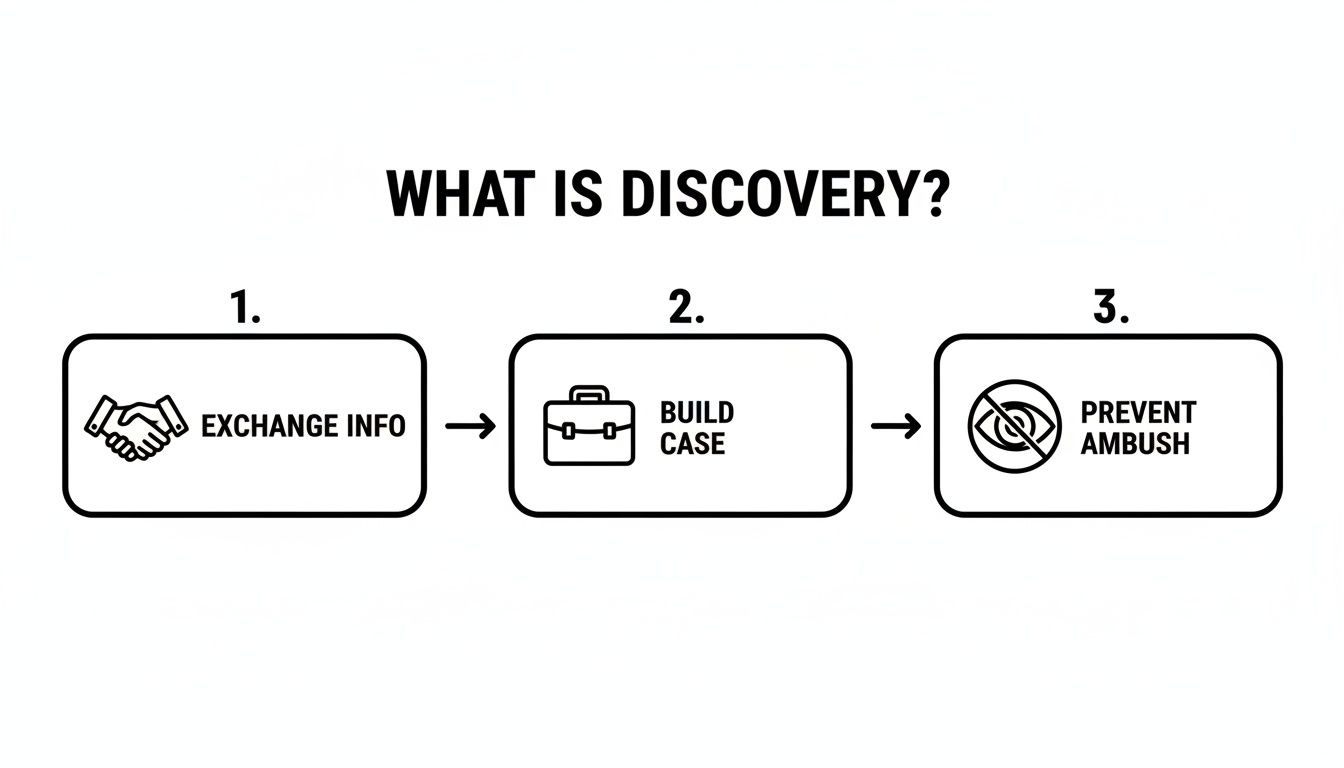
Think of it as the ultimate pre-game scouting report. The entire purpose is to prevent a "trial by ambush," where one side suddenly springs a surprise witness or a hidden document on the other. Discovery levels the playing field, making sure everyone knows exactly what ammunition the other side is bringing to the fight.
At its core, discovery is a meticulous, often grueling, information exchange. It’s where you might find that one "smoking gun" email or, just as importantly, realize your own case has some ugly weak spots you'd rather not discuss in front of a jury.
The process is designed to achieve three critical goals:
To make this crystal clear, here’s a quick breakdown of what discovery really is. No fluff.
| Component | What It Really Means | Why It Matters |
|---|---|---|
| Purpose | Preventing surprises at trial. | Ensures cases are decided on facts, not courtroom theatrics. |
| Process | A mandatory exchange of all relevant info. | It forces transparency and helps both sides evaluate their case. |
| Outcome | Building a case, finding weaknesses, and pushing for settlement. | This is where the foundation for a win is built. |
Ultimately, this phase sets the stage for everything that follows. The problem? The amount of information involved has become a monster. A staggering 93% of litigation teams say the sheer volume of data is growing exponentially, driven by everything from Slack messages to Microsoft 365 files. This data explosion translates directly to higher costs and bigger risks. You can see the full research on these litigation trends if you enjoy terrifying statistics.

Discovery is where you test your legal theories, put pressure on the opposition, and lay the groundwork for a win. Get it right, and you’re in the driver's seat. Get it wrong, and you'll spend the entire case playing defense.
Alright, let's get into the nitty-gritty. Discovery isn't some monolithic blob of legal procedure. It’s a full-blown arsenal, and knowing which weapon to deploy—and when—is the difference between a clean win and a slow, expensive defeat.
If you think all discovery methods are created equal, you're already behind. This isn't about just sending out a generic list of questions and hoping for the best. It's about surgical strikes.
Most of the action boils down to five core methods. Think of these as your primary tools. You wouldn't use a sledgehammer to perform surgery, right?
Interrogatories: These are the written grillings. You send a list of questions, and the other side must answer them in writing, under oath. Great for nailing down basic facts and timelines. But be warned: a sloppy, open-ended question is a gift to your opponent, practically begging for a useless answer.
Requests for Production (RFPs): This is the classic "show me the files" demand. You ask for documents, emails, contracts—any tangible evidence. This is often the sledgehammer, capable of unearthing the smoking gun, but it can also bury your team in a million irrelevant files if you’re not specific.
Depositions: The face-to-face interrogation, the stuff of TV dramas. You get to question witnesses and the other side under oath, with a court reporter transcribing every word. A sharp deposition can end the fight before it starts. It's also, by far, one of the most expensive tools in the box.
Requests for Admission (RFAs): This is the "just admit it" gambit. You send a list of statements, and the other side must admit or deny them. This is a scalpel, perfect for forcing your opponent to concede undisputed facts so you don't have to waste time proving them at trial.
Requests for Inspection: Sometimes you just need to see something for yourself. This tool allows you to physically inspect property or objects, like a faulty piece of machinery or the site of an accident.
To effectively navigate this, you'll need tech. Specialized tools like legal transcription software are a godsend for turning hours of deposition audio into searchable text.
Picking the right tool isn’t just procedure; it’s strategy. You need to weigh the cost against the potential reward. A poorly executed discovery plan can burn through a client's budget with nothing to show for it.
Here’s a tactical guide to help you choose wisely.
| Method | Best Used For | Pro Tip | Watch Out For |
|---|---|---|---|
| Interrogatories | Getting basic facts, identifying witnesses, and understanding core claims. | Be painfully specific. Ask "who, what, when, where" questions that are hard to dodge. | Vague, boilerplate answers drafted by clever lawyers to reveal absolutely nothing. |
| RFPs | Obtaining key documents, emails, and contracts that form the case's backbone. | Get a rock-solid system for organizing documents. Our guide to the best document management software for law firms is a good start. | Getting buried in a "document dump"—a deliberate tactic to overwhelm you with irrelevant junk. |
| Depositions | Locking in sworn testimony, assessing witness credibility, and setting traps for trial. | Prepare relentlessly. Know the documents cold and have a clear objective for every single question. | A "runaway" witness who won't give a straight answer, or an unprepared deponent who torpedoes your case. |
| RFAs | Narrowing the issues by forcing admissions on undisputed facts. | Use them to build your case, brick by boring brick. Every admission is one less thing to prove. | Overly broad requests that draw legitimate objections, wasting time and your judge's patience. |
Each method has its place. The key is to think several moves ahead, using each tool as part of a cohesive strategy to box in your opponent.
The goal isn't just to gather information; it's to gather useful information. Every request, question, and demand should have a clear strategic purpose tied directly to winning. Anything else is just noise.
Welcome to the real battlefield of modern litigation. The days of swapping a few boxes of paper are long gone. Now we have a storm of electronically stored information (ESI) that never, ever sleeps. We’re talking about data from Slack, Microsoft Teams, text messages, and a dozen other platforms you probably use without a second thought.
This is the monster in the room: eDiscovery. It’s where modern litigation gets messy, expensive, and frankly, a bit terrifying. If you don’t have a rock-solid game plan, you can get buried alive.

This new reality has completely changed the game. Discovery has evolved from reactive drudgery into a critical function for controlling costs and risk. Tools like AI legal document review are no longer a luxury; they're essential. In fact, many firms now see eDiscovery spending as a strategic investment rather than just a necessary evil.
You can't just ask for "everything." The courts know this, which is why they’ve given you a few shields to protect yourself from overly broad discovery requests. Mastering these is non-negotiable.
Think of it like this: Relevance is the gatekeeper that asks, "Does this even belong here?" Proportionality is the bouncer who then asks, "Is it really worth the trouble to let it in?"
You have to be aggressive in pushing back. The default shouldn’t be to just hand everything over. The default should be to scrutinize every single request through the lens of relevance and proportionality.
Even if a document is relevant and proportional, there's one final, sacred protection: privilege. This is your ultimate shield, and you need to guard it with your life.
There are two main types you need to know cold:
Asserting privilege isn't just a matter of saying, "It's privileged!" You need to meticulously document every single item you withhold on a privilege log. Messing this up is a fantastic way to get sanctioned by a judge or accidentally waive privilege. This is a perfect example of a task where outsourcing can be a game-changer. Check out our thoughts on what is legal process outsourcing for these kinds of high-stakes tasks.
Managing modern evidence is no longer a side quest; it's the main event. Getting it right means controlling costs. Getting it wrong? Well, let’s just say those eDiscovery vendor bills can get ugly, fast.
So, your opponent is playing games. It was bound to happen.
They’re ignoring your perfectly reasonable requests, turning over documents so heavily redacted they look like modern art, or objecting to everything just for the fun of it. Welcome to the messy, frustrating side of discovery.
This isn’t just an annoyance; it’s a strategy designed to bleed you dry. But this is no time to get angry. It’s time to call the referee: the judge. When a simple phone call goes nowhere, you have to be ready to escalate. And no, this isn't about burning billable hours—it's about fighting smart.
Let's break down the most common discovery showdown: the Motion to Compel. Think of this as your primary offensive weapon when the other side refuses to play by the rules. You’re essentially telling the court, "Your Honor, they’re not sharing. Please make them."
You’ll file a Motion to Compel when your opponent:
Filing this motion forces their hand. Now, they have to justify their behavior to a judge, who has very little patience for this kind of nonsense.
Think of it this way: a Motion to Compel is a calculated risk. You’re spending client money to get the court involved. But when you’re right, and the information is critical, it’s a move that can break a case wide open.
Now, let's flip the script. What if you’re the one being bombarded with unreasonable demands? What if opposing counsel is demanding every email your client has sent since the dawn of the internet?
This is where you deploy your shield: the Motion for a Protective Order. This motion asks the court to protect you from discovery requests that are annoying, oppressive, or create an undue burden or expense. It's your best defense against a "fishing expedition."
You might file this motion to:
Knowing when to file these motions versus when to just pick up the phone is an art form. But when you’re faced with deliberate gamesmanship, these tools are essential for protecting your client and keeping the litigation moving forward on your terms.
Let's get straight to the point: money. Discovery is where legal budgets go to die. It is, by a long shot, the single most expensive phase of nearly every commercial lawsuit.
The sheer volume of hours poured into document review, depositions, and motion practice can bring a company to its knees. This isn't just about paying lawyers' hourly rates; it's a sprawling ecosystem of costs that balloons faster than you can say "motion to compel."
Ever wonder why the meter is always running? The costs stack up with terrifying speed. It's a financial gauntlet that can weed out anyone who isn't prepared for a long, expensive fight.
Here’s where your money vanishes:
This isn't just a line item on a budget; it's a strategic weapon. Parties with deeper pockets often leverage the sheer cost of discovery to bleed their opponents dry, hoping to force a cheap settlement from someone who simply can't afford to keep fighting.
This financial pressure cooker has fueled a massive industry you’ve probably heard of: litigation finance. These are investors who will bankroll a lawsuit in exchange for a cut of the settlement.
The rise of litigation funders is a direct response to the crippling expense of discovery. Think of them as venture capitalists for lawsuits.
And it’s no small operation. The litigation funding industry has exploded to over $15 billion and is projected to hit $25 billion by 2030. These numbers show just how high the stakes have become. For instance, the ten largest data breach class action settlements recently totaled $593 million—a 15% jump from the prior year—with exhaustive discovery driving those massive figures. You can explore more about how litigation funding trends are reshaping the legal landscape.
Getting discovery right isn't a luxury; it's a core business strategy. If you don't get a handle on your discovery costs, they will absolutely get a handle on you.
Alright, let's be blunt. We all know discovery is where legal budgets go to die. It's a black hole of eDiscovery vendor fees and endless billable hours spent slogging through documents.
So how do you wrestle this beast to the ground without mortgaging your office ping-pong table? It’s not about finding some magic software; it’s about getting smarter about who does the work. This isn't a new idea, it's just good business—the kind of insight you gain after watching too many strong cases settle for pennies because the discovery costs became unsustainable.
Think about the tasks that eat up 80% of the time in discovery. We're talking about the repetitive, often mind-numbing, but absolutely critical work that simply has to get done right. It's the kind of stuff that makes a sharp young associate question their career choices.
This includes tasks like:
This is the grind. It demands precision, but it doesn't demand a six-figure salary. When you assign this work to high-cost attorneys, you're essentially using a race car to deliver pizza. Sure, it'll get there, but it’s a spectacular waste of a high-performance machine.
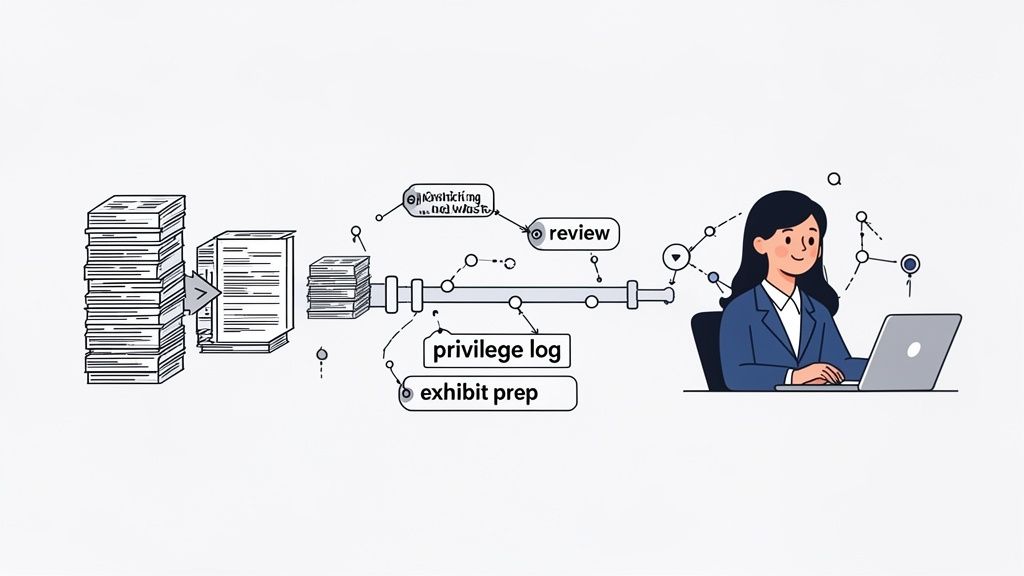
The key is matching the right task to the right talent, creating a workflow that’s both efficient and cost-effective.
This is where the lightbulb went on for us, the idea that sparked HireParalegals. We realized the solution wasn't to work harder; it was to delegate smarter. The highly structured, process-driven tasks in discovery are a perfect fit for skilled, on-demand remote paralegals. For a deep dive, our guide on what a litigation paralegal does breaks it all down.
Now, this isn't about tossing a job onto a generic freelance site and hoping for the best. Hope you enjoy spending your afternoons fact-checking resumes—because that’s now your full-time job. This is about a system built specifically for the demands of a law firm.
We built a system that combines smart matching with rigorous human vetting. It connects you with experienced paralegals who have the exact skills you need, ready to go. Toot, toot! Think of it less as a temp service and more as a tactical advantage.
This approach completely flips the script on discovery costs. By assigning the right tasks to the right talent at the right price, you hit two critical goals at once.
First, you slash the single biggest line item in most litigation budgets. Second, you free up your internal team to focus on the high-level strategy that actually wins cases. They can spend their time prepping for a key deposition or drafting a killer motion, instead of drowning in the document swamp.
That's how you turn your biggest liability into a strategic weapon.
Alright, let's tackle the questions that usually keep people staring at the ceiling at 2 a.m. No fluff, just the straight-up answers you need when you're in the trenches.
The honest answer? It depends entirely on the case. There's no magic number.
A simple contract dispute might get wrapped up in a few months. But a sprawling, multi-party class action with terabytes of data? That can easily stretch on for years.
The court will issue a scheduling order that sets the initial timeline, but don’t get too attached to it. Those dates are often just a starting point, frequently extended due to disputes or good old-fashioned legal gamesmanship. The key is managing expectations from day one.
Just don't. Seriously. This is called spoliation of evidence, and it is one of the fastest ways to tank your case and get slapped with sanctions. It’s the legal equivalent of trying to hide a smoking gun by throwing it in a river while the police are watching.
The penalties are no joke. They can range from hefty fines to the judge issuing an "adverse inference" instruction. That's where the judge tells the jury they are allowed to assume the evidence you destroyed would have been devastating to your case. In extreme situations, it can lead directly to a default judgment, meaning you lose the lawsuit automatically.
Only under very specific, legally protected circumstances. You can’t refuse to answer just because a question is uncomfortable or makes your case look bad. Your lawyer is there to protect you from improper questions, not to help you dodge the tough ones.
The main reason to refuse is privilege. If a question asks about a confidential conversation you had with your attorney, your lawyer will jump in and instruct you not to answer. That's their job. But if the question is relevant and not privileged, you have to answer it truthfully. Attempting to stonewall will only make the judge angry and your deposition much, much longer.
Think of it like this: ESI is the stuff, and eDiscovery is the process of dealing with the stuff.
ESI (Electronically Stored Information): This is the "what." It's the actual evidence—the emails, Slack DMs, text messages, spreadsheets, and Word documents that make up the digital backbone of your case.
eDiscovery: This is the "how." It's the entire, often painful, process of identifying, collecting, searching, reviewing, and ultimately producing all that ESI for the lawsuit. It's the verb to ESI's noun.