 15 minutes read
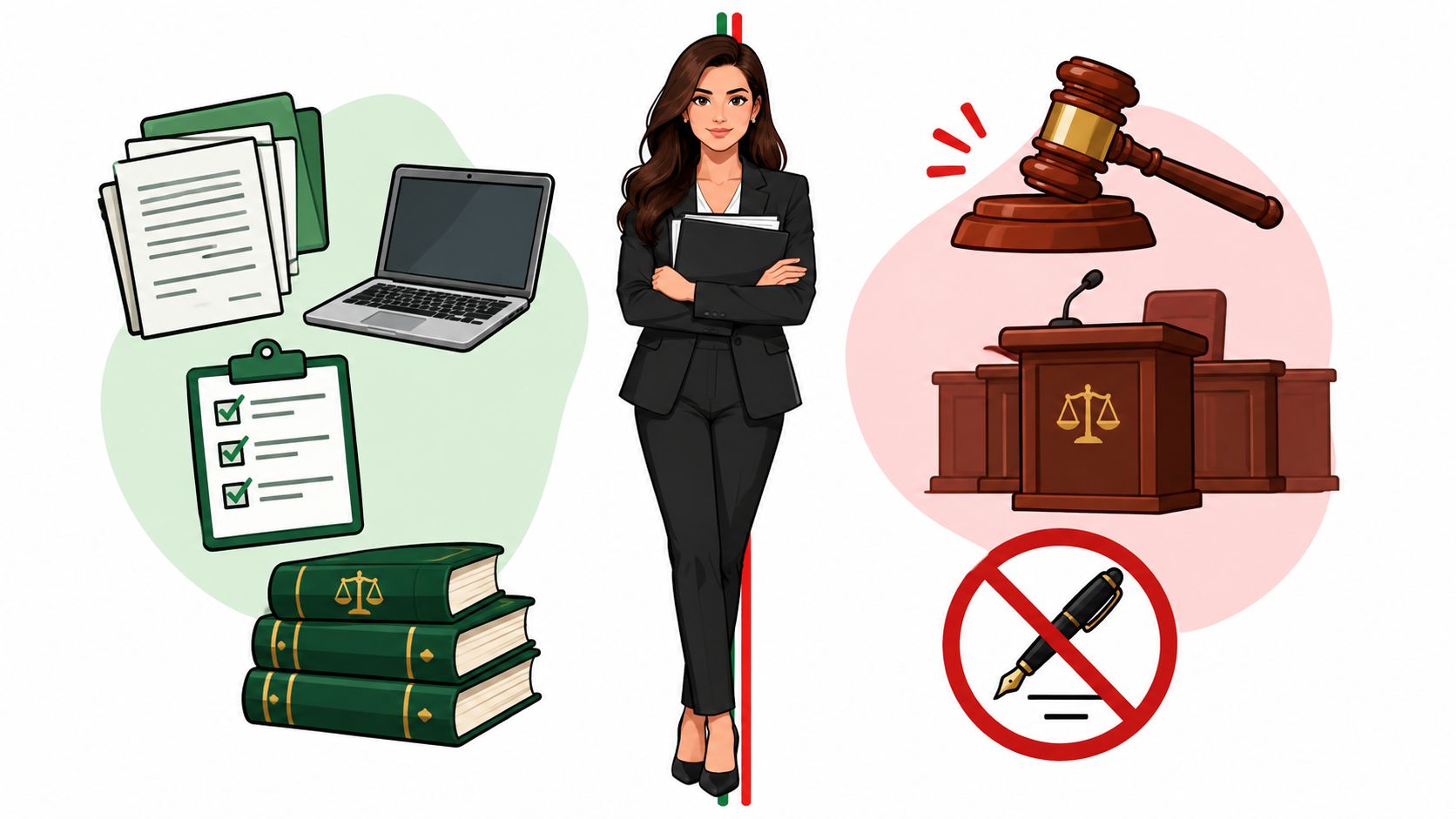
A paralegal can legally perform any preparatory task properly delegated and directly supervised by a licensed attorney, but they can't give legal advice, set fees, or establish the attorney-client relationship. The lawyer must retain control of the matter, the client relationship, and the professional responsibility for the work.
You're probably asking because a paralegal just saved your firm from drowning in discovery, then answered a client's question with a confident “yes.” That tiny word can create a very large headache. The work may have been excellent, the intention may have been harmless, and the supervision may have been almost nonexistent. That's how firms end up investigating a preventable unauthorized-practice complaint instead of preparing the next filing.
I've hired talented paralegals, relied on them heavily, and learned the hard way that competence doesn't erase legal boundaries. A strong paralegal should increase your capacity. They should not become an unsupervised lawyer with access to your inbox.
A client calls with a simple intake question. “Do I have a case?” Your paralegal knows the facts, understands the firm's practice area, and wants to be helpful. So they say, “Yes, it sounds like you do.”
That answer may feel like good customer service. It may also sound like a legal opinion. The problem isn't that the paralegal spoke to the client. The problem is that the paralegal made an independent legal judgment and presented it as guidance.
The controlling principle is straightforward. A paralegal may handle preparatory legal work when a licensed attorney properly delegates the task and directly supervises it. The lawyer must review, approve, or complete the matter using independent legal judgment. A widely cited 2000 South Carolina Supreme Court decision describes lawful paralegal work in terms of legal research, factual investigation, and drafting legal documents, provided the attorney retains that independent judgment and responsibility. The South Carolina Supreme Court decision is a useful foundation because it focuses on the dividing line, not job titles.
The practical test isn't just, “Is this a paralegal task?” The better question is, “Does this assignment require the paralegal to make an independent legal decision or act with legal authority?”
A paralegal can help build a case file, organize evidence, research authorities, prepare a draft motion, or assemble a contract for review. The attorney must then evaluate the facts, decide the legal strategy, revise or approve the work, and communicate the legal position to the client.
That responsibility doesn't move just because the paralegal is experienced. It doesn't move because the client prefers dealing with the paralegal. It doesn't move because the attorney is overloaded and has “approved this kind of thing before.”

Practical rule: Delegate the work. Keep the judgment.
The professional standards reflected in national paralegal ethics guidance require proper delegation and supervision, with the attorney maintaining responsibility for the work product and the client relationship. If your workflow gives a paralegal authority to decide what legal position the firm will take, the workflow is broken, regardless of how polished the final email looks.
If you're still formatting pleadings, sorting medical records, or building a chronology yourself, you're spending lawyer time on work someone else can prepare. The answer to what can a paralegal legally do includes a substantial amount of valuable case preparation, as long as the work is preparatory and reaches the attorney for legal judgment.
Start with assignments that produce organized material, not final legal conclusions.
Legal research is a classic example. A paralegal can research statutes, regulations, procedural rules, and relevant authorities, then prepare a research memo that identifies the issue, summarizes the authorities, and flags factual questions. The attorney decides which authority controls and what position the firm should take.
Factual investigation is another high-value area. A paralegal can collect records, identify missing documents, create a witness list, prepare interview questions, and conduct preliminary client or witness interviews under direction. They can separate confirmed facts from disputed allegations, which gives you a cleaner platform for strategy.
Document drafting should go well beyond typing. A paralegal can prepare an initial motion, discovery requests, deposition summaries, contract language, correspondence, or filing package for attorney review. The safe workflow requires the attorney to evaluate the legal substance before anything goes to the client, opposing counsel, a court, or an agency.
Case-file management is where good firms gain speed. Have the paralegal maintain pleadings, exhibits, correspondence, deadlines, privilege labels, factual chronologies, and discovery indexes. A well-built file lets the attorney find the answer without excavating a digital landfill.
Give each assignment a defined purpose, source set, deadline, and review point. “Look into this” is not delegation. It's a scavenger hunt with malpractice potential.
A useful assignment might say:
That structure lets the paralegal contribute analytical value without turning the assignment into independent legal advice. For a practical workflow, use this guide on how to delegate legal tasks effectively.
The distinction matters. A paralegal may prepare the factual and legal building blocks. The attorney must decide what those blocks mean for the client.
Don't reduce a paralegal to a glorified typist. That wastes training, judgment, and the very advantage you hired them to provide. Do use their skills to prepare the case more intelligently, then keep the final legal decisions in attorney hands.
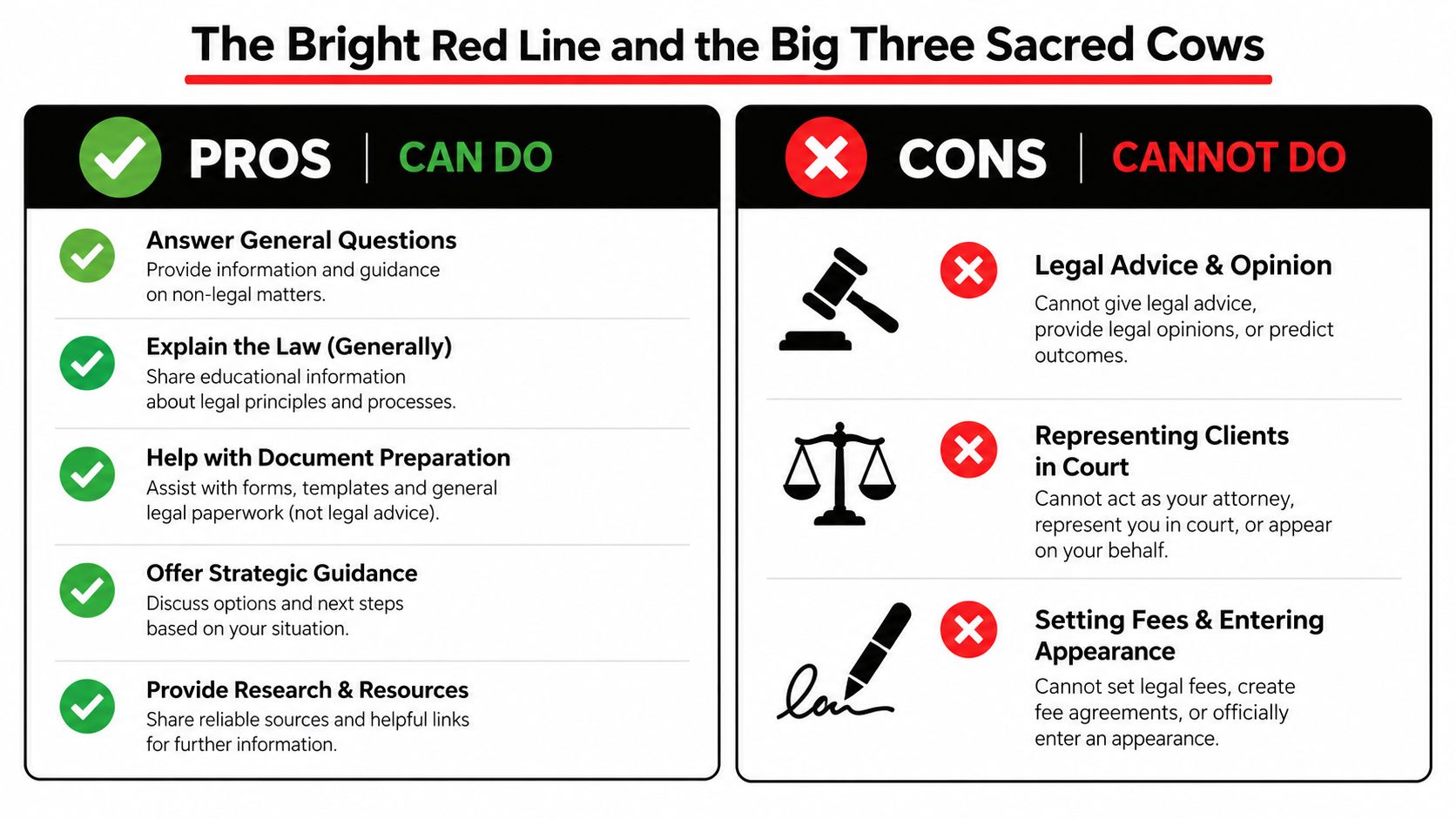
Supervision is not a permission slip. A managing partner cannot approve a prohibited legal function and make it acceptable for a paralegal to perform. If the task requires legal judgment, representation, or control of the attorney-client relationship, keep it with a licensed attorney.
The big three sacred cows stay with the attorney:
A paralegal can collect intake information, schedule a consultation, and record what a prospective client reports. The attorney must decide whether the firm accepts the matter, define the representation's scope, set the fee, and provide the legal advice. Remote work makes this boundary easier to blur because an attorney may see only a message thread while the paralegal is handling the live interaction.
Professional guidance identifies several additional prohibitions. A paralegal must not give legal advice, represent a client in court, take a deposition, or provide legal services to the public without supervision and direction from a licensed attorney. The Texas Bar's warning on unauthorized practice identifies giving legal advice, taking a deposition, appearing in court, establishing attorney-client relationships, and arranging fees as prohibited conduct in the circumstances it describes. For a practical explanation of the boundary, see our guide to what is unauthorized practice of law.
The client needs legal judgments from someone licensed to make them. The attorney also needs a delegation system that does not disguise careless oversight as supervision. The ABA discussion of Rule 5.5 reinforces the principle that unauthorized legal practice remains prohibited even when a task appears routine.
Train paralegals to stop and route legal questions upward. Give them short scripts that are accurate and deliberately boring:
Those scripts identify the decision-maker and create a record of the handoff. Require remote staff to log the question, the attorney's instruction, and any follow-up, rather than relying on memory or scattered chat messages.
Experience makes a paralegal more useful, not more licensed. A capable remote team member may handle client calls, explain approved procedures, or track deadlines, but the attorney must remain involved when the conversation turns to settlement choices, legal meaning, or a material commitment. Otherwise, your license is wearing a fake mustache.
“Paralegals can't give legal advice” is correct but incomplete. Most risk doesn't arrive in a dramatic courtroom scene. It arrives in ordinary client communication, where a harmless administrative update gradually becomes a recommendation, negotiation, or legal conclusion.
A paralegal may communicate under attorney direction. The communication must remain ministerial, meaning it conveys an approved instruction or gathers information without adding independent legal judgment.
Consider a settlement conversation. A paralegal may transmit settlement terms that the attorney has already approved, confirm whether a client received an offer, collect the client's questions, or arrange a call with the attorney. The paralegal should not recommend acceptance, characterize the likely outcome, negotiate a material term, or tell the client what the offer means legally.
The safest way to audit client communication is to examine the verb.
“Please sign the attorney-approved filing and return it” is administrative. “You should sign this because it will protect your position” is legal advice.
“We received the settlement proposal, and the attorney will discuss it with you” is a status update. “This is a fair offer, and you should accept it” is a legal judgment.
“I'm confirming the payment instructions approved by the attorney” is ministerial. “You need to pay this amount to keep your case alive” may be an unauthorized legal conclusion, depending on the facts and jurisdiction.
North Carolina's rules and commentary treat legal services, legal advice, and independent legal judgment as prohibited for unsupervised nonlawyer activity, while permitting legally related tasks under direct supervision. The Wake Forest Law Review discussion is useful for understanding why this boundary remains contested, particularly around client-facing and litigation-adjacent work.
Your standard operating procedure should require:
Different jurisdictions may draw these lines differently, so your supervising attorney must apply the rules governing the matter. A script is helpful. A script that nobody reviews is just unauthorized practice with better formatting.
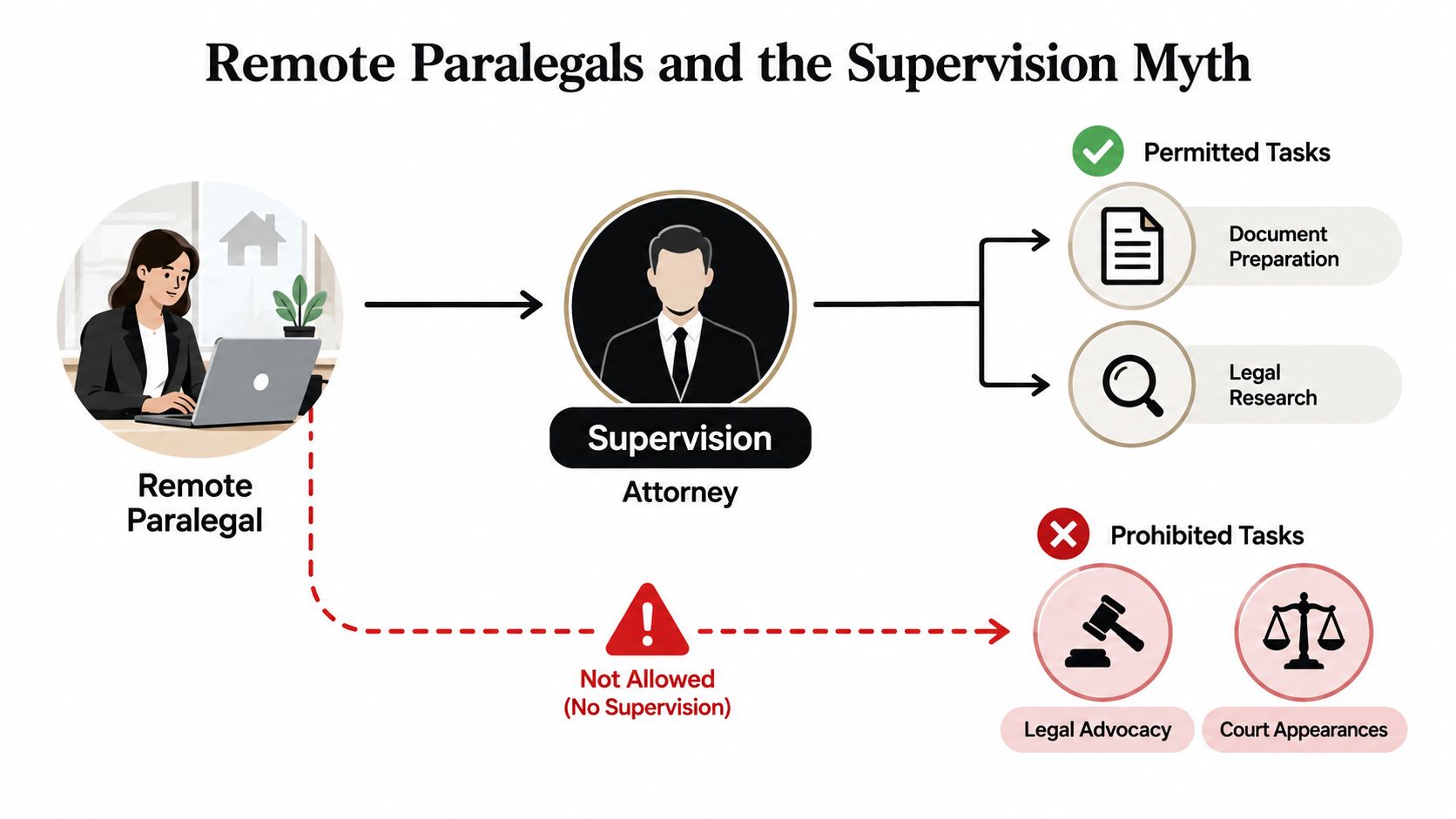
Remote work doesn't change what a paralegal may legally do. It changes whether your firm can prove that the attorney supervised the work.
An attorney sitting in the same office can still fail to supervise. A remote attorney can supervise effectively if the firm creates active review, clear assignment ownership, secure communication, and a reliable record of decisions. Geography isn't the ethical standard. Effective supervision is.
The British Columbia Law Society's guidance on remote supervision expressly recognizes remote supervision when the attorney has an effective means of actively supervising the paralegal. That's the right operational lens for distributed teams, even though specific obligations vary by jurisdiction.
Use a workflow with visible checkpoints:
Time zones make this more important. If the paralegal works while the attorney sleeps, the firm needs a clear rule that drafts remain drafts until the supervising attorney reviews them. “The client needed an answer immediately” is not a supervision protocol.
Minnesota's 2025 court-rule amendments requiring co-signing by the supervising attorney and legal paraprofessional in represented cases illustrate the same principle: remote work doesn't dilute attorney accountability. These supervision best practices can help firms turn that principle into repeatable operating procedures.
For firms building a distributed team, it's sensible to browse paralegal roles while separately testing each candidate's practice-area experience, communication discipline, and ability to work inside attorney-controlled workflows. Talent sourcing is only half the job. The other half is making sure nobody mistakes availability for authority.
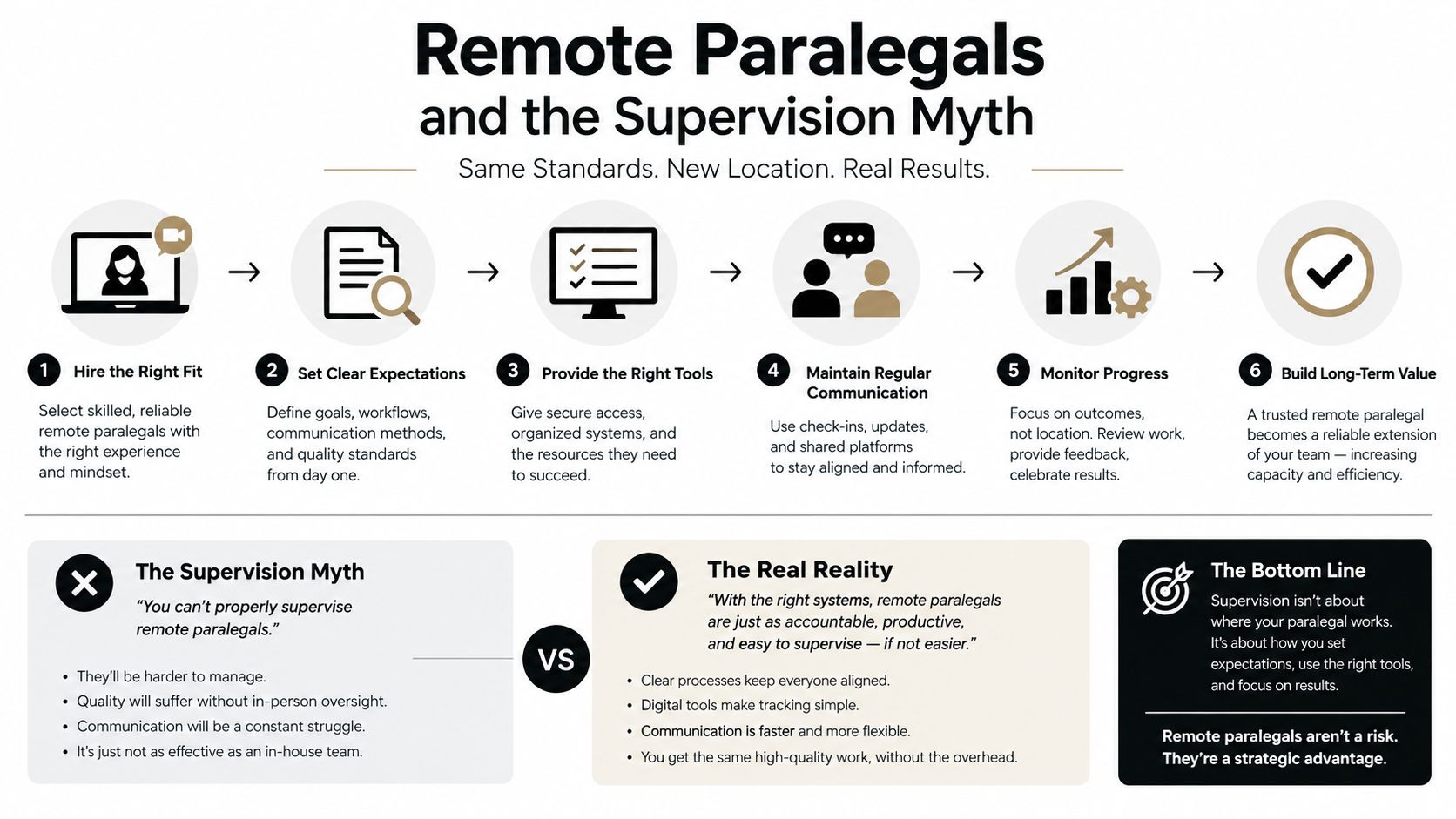
A compliant delegation program starts before the paralegal opens a client file. Job descriptions, permissions, review gates, and escalation rules should be written while everyone is still optimistic and nobody is blaming the calendar.
Use this checklist during hiring and onboarding:
The job description should describe outputs, not pretend the paralegal is a cheaper associate. “Draft discovery responses for attorney review” is precise. “Manage discovery independently” is an invitation to confusion.
| Delegation Phase | Action Required | Compliance Check |
|---|---|---|
| Role design | Define preparatory tasks and prohibited legal functions | Does the description reserve legal judgment to the attorney? |
| Assignment | Provide written scope, materials, deadline, and deliverable | Is a supervising attorney identified? |
| Production | Keep research, drafts, evidence, and notes in the approved system | Can the firm trace who prepared each item? |
| Review | Require attorney review before filing or substantive communication | Is approval recorded before release? |
| Client contact | Use approved scripts and escalate legal questions | Did the paralegal avoid advice, negotiation, and legal conclusions? |
| Audit | Review work product, access, and communications | Has the attorney corrected recurring boundary problems? |
Practice-management software can enforce some of this structure through task assignments, document permissions, version histories, and approval workflows. Technology won't supervise anyone by itself, but it can make supervision visible. That's a meaningful difference when a firm needs to explain who reviewed what and when.
The final check is brutally simple: if the attorney hasn't read the work, understood the issue, and made the legal decision, the task isn't finished. It's still sitting in the review queue, no matter how polished it looks.
A paralegal should take preparation off your desk, not legal judgment out of your hands. The strongest arrangement gives the paralegal ownership of organized execution while the attorney keeps authority over advice, strategy, representation, fees, and the client relationship.
That division lets a firm move faster without pretending the license is transferable. Research, factual investigation, drafting, evidence management, interviews, and case administration can create enormous efficiency gains when the attorney reviews and integrates the work into the final product.
Remote staffing can work just as well as office staffing when the firm documents assignments, controls access, uses review gates, and keeps communication within approved boundaries. The dangerous setup isn't remote. It's vague.
You don't need to make your paralegal less capable. You need to make the workflow more disciplined. Hire for judgment, train for escalation, supervise actively, and keep the big decisions where they belong.
Audit your current paralegal workflow this week. Mark every task involving client advice, settlement discussions, fees, intake decisions, filings, or court contact, then assign a supervising attorney and a documented review gate to each one. If your firm needs additional remote capacity, compare qualified candidates through HireParalegals, and build the supervision process before the first new hire touches a client matter.