
 16 minutes read
A solo attorney's caseload can change faster than the hiring process. One week brings a discovery deadline and a stack of intake forms. The next brings a quieter docket, but the new full-time hire is still on payroll. An on demand staffing platform gives law firms another option: access to vetted remote legal professionals for overflow, project work, or specialized support without committing immediately to permanent headcount.
The model works best when the firm treats staffing as an operational workflow, not a faster job posting. The platform should understand the role, practice area, software, seniority, jurisdictional boundaries, availability, and timezone before recommending candidates. The firm still needs to define work clearly, verify credentials and skills, protect confidential information, and supervise delegated tasks.
This guide explains how the model differs from agencies and freelance marketplaces, how matching and vetting should work for credential-sensitive legal roles, and where the approach fits for solo practices, mid-sized firms, and corporate legal departments. It also covers implementation, performance measurement, cost considerations, and the practical questions to ask before approving a platform.
A small immigration practice may suddenly need help organizing petitions, requesting missing documents, and updating clients. A litigation team may need temporary discovery support before a production deadline. A corporate legal department may require a legal assistant for a transaction while an employee is on leave. In each situation, the underlying problem isn't merely finding another person. The firm needs capable support quickly, with enough confidence that the work won't create more review burden than it removes.
An on demand staffing platform connects a firm with remote professionals who can support defined legal workflows on a flexible basis. Depending on the arrangement, that support may be hourly, project-based, part-time, or a bridge while the firm evaluates a longer-term hire. The platform's value comes from combining intake, talent search, screening, matching, and administrative coordination rather than leaving the manager to perform every step separately.
The market context helps explain why this model has gained attention. The on-demand staffing platform market grew from US$168.48 million in 2022 to a projected US$386.24 million by 2028, representing a projected 14.8% compound annual growth rate across that period, according to market data on on-demand staffing platforms. Law firms, however, can't evaluate the model like a warehouse hiring hourly labor. Legal work is credential-sensitive, confidential, practice-specific, and often dependent on precise written communication.
The right evaluation therefore moves from concept to control. You need to know how a platform filters candidates, how the firm checks skills, how timezone alignment affects supervision, and how costs compare with the risk of a poor match. The answers differ for a solo attorney, a growing firm, and an in-house department.
Traditional hiring begins with a job description, advertising, applications, interviews, reference checks, and onboarding. That process makes sense for a permanent role, especially when the firm needs continuity and expects the employee to own a broad set of responsibilities. It becomes less efficient when the immediate need is a defined project or temporary increase in workload.
A temporary staffing agency usually manages sourcing and placement for the client. A freelance marketplace gives the client access to a broad pool, but the client often has to evaluate experience, reliability, identity, and fit independently. An on demand staffing platform sits between those models. Think of it as a curated talent concierge rather than an open job board. The firm explains the work, and the platform uses structured filters, a talent network, and human review to narrow the pool.
Cloud-based access allows managers to submit requests, review profiles, communicate with candidates, and manage staffing information through a centralized system. Platform workflows may also use AI-assisted resume assessment or matching, but legal teams should treat algorithmic recommendations as an initial screening layer, not a substitute for professional judgment or direct interviews. Contingent workforce analytics guidance emphasizes that useful workforce systems combine historical information with predictive and prescriptive analysis to support skills planning, supplier decisions, and engagement choices.
An on demand arrangement is generally appropriate when the work has a defined scope and the firm can identify the expected output. Examples include:
Direct hire remains more suitable when the firm needs long-term institutional knowledge, daily ownership of evolving responsibilities, or a person who will supervise others. The platform should not be used to blur the line between administrative support and licensed legal work. A remote paralegal or legal assistant can perform delegated tasks within the firm's procedures, but attorneys retain responsibility for legal judgment, client advice, and supervision.
For firms comparing providers, flexible staffing solutions for law firms can serve as one reference point for understanding how a specialized legal staffing model differs from general labor platforms.
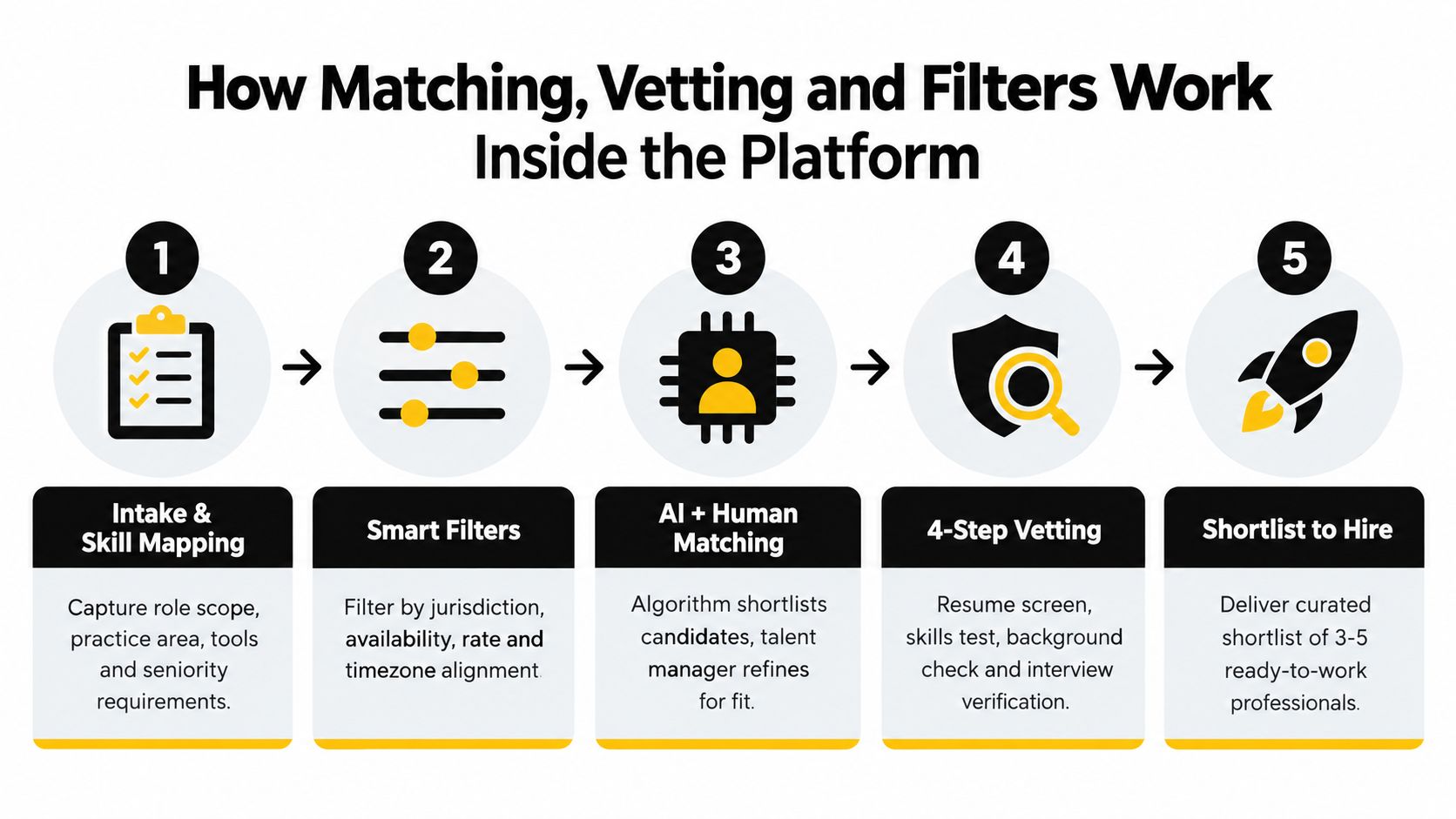
A reliable platform doesn't start with “find me a paralegal.” That request is too broad. The useful intake identifies the matter type, task list, expected volume, systems, communication requirements, required experience, working hours, and limits on independent decision-making.
A litigation request might require familiarity with discovery organization, document management, and a specific case-management system. An immigration request may prioritize form preparation from attorney-approved data, client communication, and document collection. A corporate request could require transaction coordination, entity records, and careful version control. These are different operating profiles, even when the job title looks similar.
The platform should translate the request into filters that can be checked rather than impressions that are difficult to test.
The legal-specific filter is essential. A candidate with strong general administrative experience may not understand the precision required in litigation support. A fluent English speaker may still lack the writing discipline needed for client-facing correspondence. A professional who works well during U.S. business hours may not be available during the firm's actual supervision window.
Timezone matching affects more than convenience. It determines whether a supervisor can answer questions, review work before a deadline, and address a client issue during the same working day. A firm that assigns urgent intake work to a person whose active hours barely overlap with the attorney's schedule may create avoidable delays.
Practice area also changes the risk profile. Immigration teams may need consistent client follow-up and document tracking. Litigation teams may require strict naming conventions, confidentiality controls, and escalation rules. Family law teams often handle emotionally sensitive communications, while corporate teams may prioritize transaction calendars and version accuracy. The manager should test the candidate against the actual workflow instead of relying on a general title.

Practical rule: Match the person to the task environment, not just to the profession named in the job title.
The firm should request work samples or skills assessments that resemble the assignment, with confidential information removed. A short exercise might test document organization, written communication, issue spotting within a defined instruction, or accurate data entry. It shouldn't ask the candidate to provide legal advice or complete work that belongs to the attorney.
For specialized verification, credential verification services for legal professionals provide a useful comparison point. The firm should still determine which checks are necessary for its clients, contracts, jurisdiction, data access, and internal policies. No screening process eliminates the need for supervision.
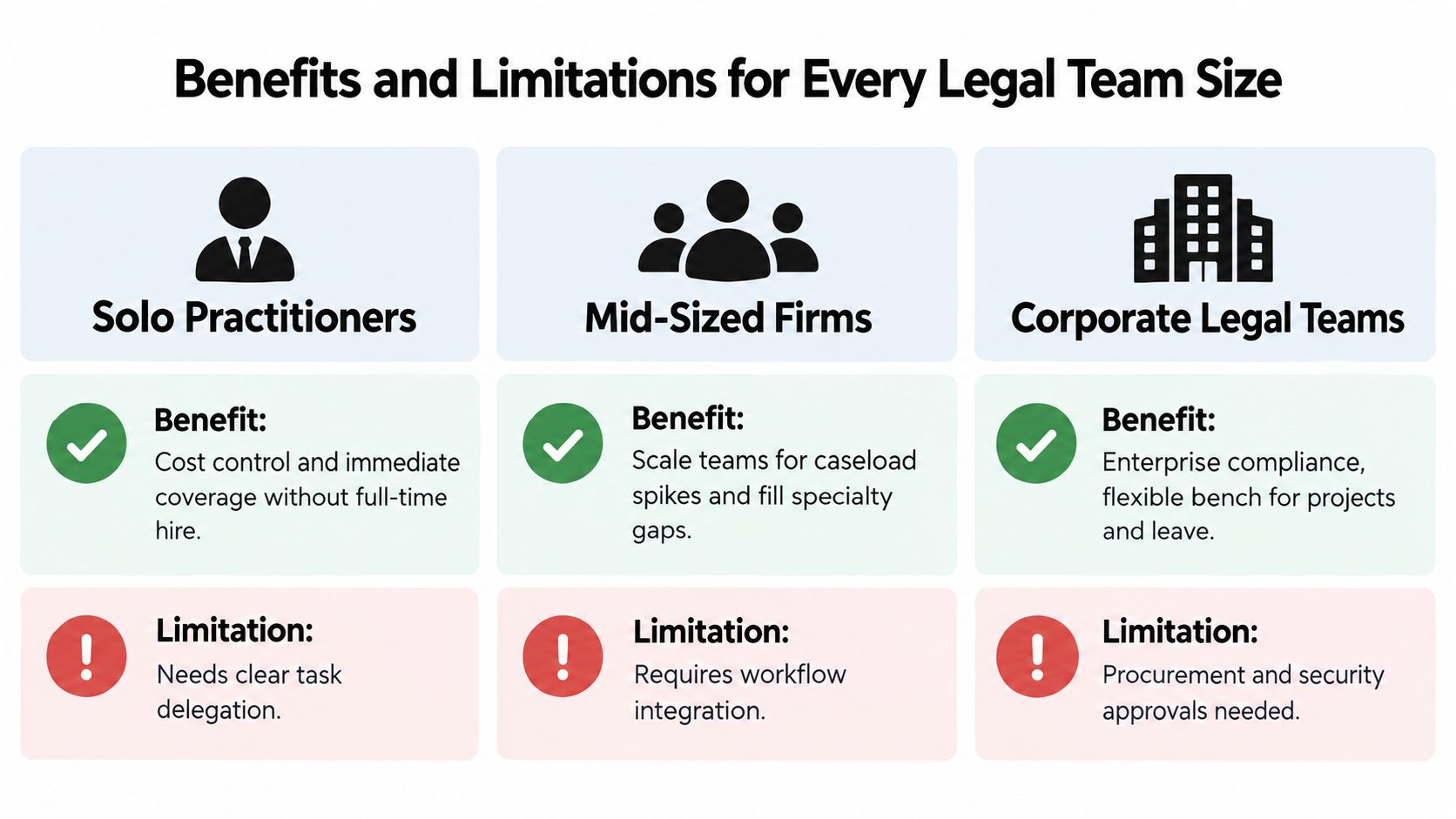
The value of on demand staffing depends on the firm's operating shape. A solo practitioner often needs immediate capacity without adding a permanent salary obligation. A mid-sized firm may need to support several teams with different practice-area demands. A corporate legal department may need controlled access to specialized support for a transaction, leave period, or discrete project.
For a solo attorney, the clearest use case is task separation. A remote legal assistant can manage intake scheduling, routine follow-up, file organization, and administrative coordination while the attorney handles legal analysis and client decisions. A paralegal may support a defined case workflow under attorney direction.
The limitation is management capacity. If the attorney gives vague instructions, changes priorities constantly, or fails to review work, flexible staffing can become another source of interruption. The solo practice should begin with a narrow role, a written checklist, and a clear escalation path.
A mid-sized firm can use flexible talent to absorb caseload spikes without asking permanent employees to carry every increase through overtime or delayed work. It can also fill a practice-area gap while recruiting for a permanent position. For example, a litigation group might add document-organization support while attorneys retain control over review decisions and strategy.
The trade-off is integration. The temporary professional needs access to the firm's document system, matter conventions, communication channels, and approval process. If each team uses a different method, the manager should standardize the assignment before adding capacity.
An in-house department may benefit from a flexible bench for contract administration, legal operations, entity maintenance, or project coordination. The department can define the information the professional may access and keep legal judgment with internal counsel.
Corporate procurement and security review can slow implementation. Vendor agreements, confidentiality terms, access controls, and internal approval requirements may need to be completed before work begins. The platform is less suitable when the project requires unrestricted access to sensitive systems but the organization can't establish role-based permissions.
The broader market also shows why buyers should separate platform growth from labor-market scale. A 2025 contingent workforce market overview cites the contingent workforce in the Americas at US$4.6 trillion in 2024, with the United States accounting for US$3.9 trillion, while digital talent platforms represented US$7.6 billion in the Americas. Those figures describe a large underlying labor economy, not a guarantee that every legal role can be filled quickly.
Remote professional legal talent can be particularly constrained. Independent industry data reported that only 4.8% of 6,323 new legal job listings in 2025 were fully remote, as described in remote staffing market coverage for specialized roles. The practical conclusion is simple: don't assume a platform removes scarcity. Use precise filters and allow the platform or recruiter to tell you when the requested combination of practice area, experience, hours, and rate is unrealistic.
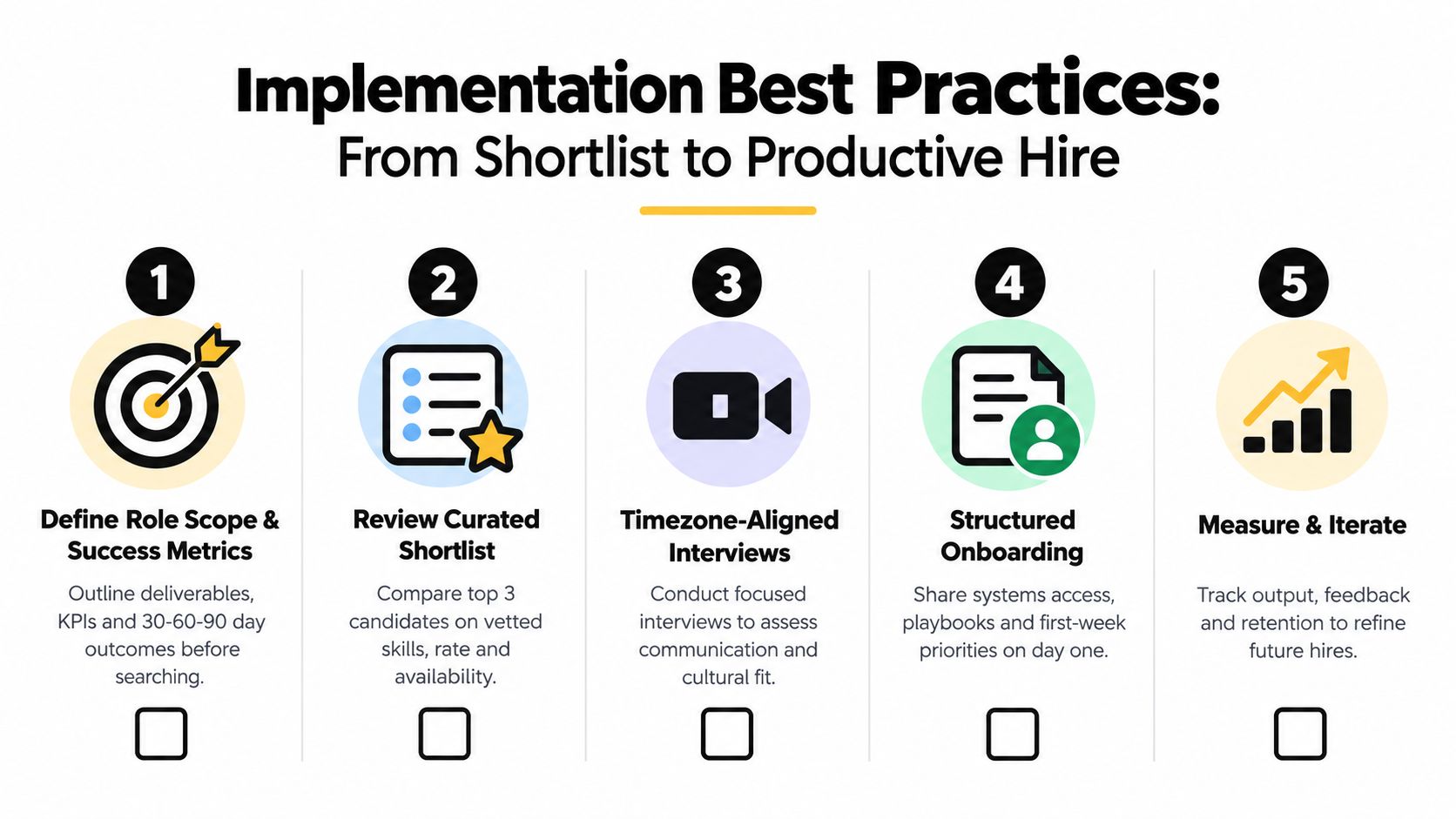
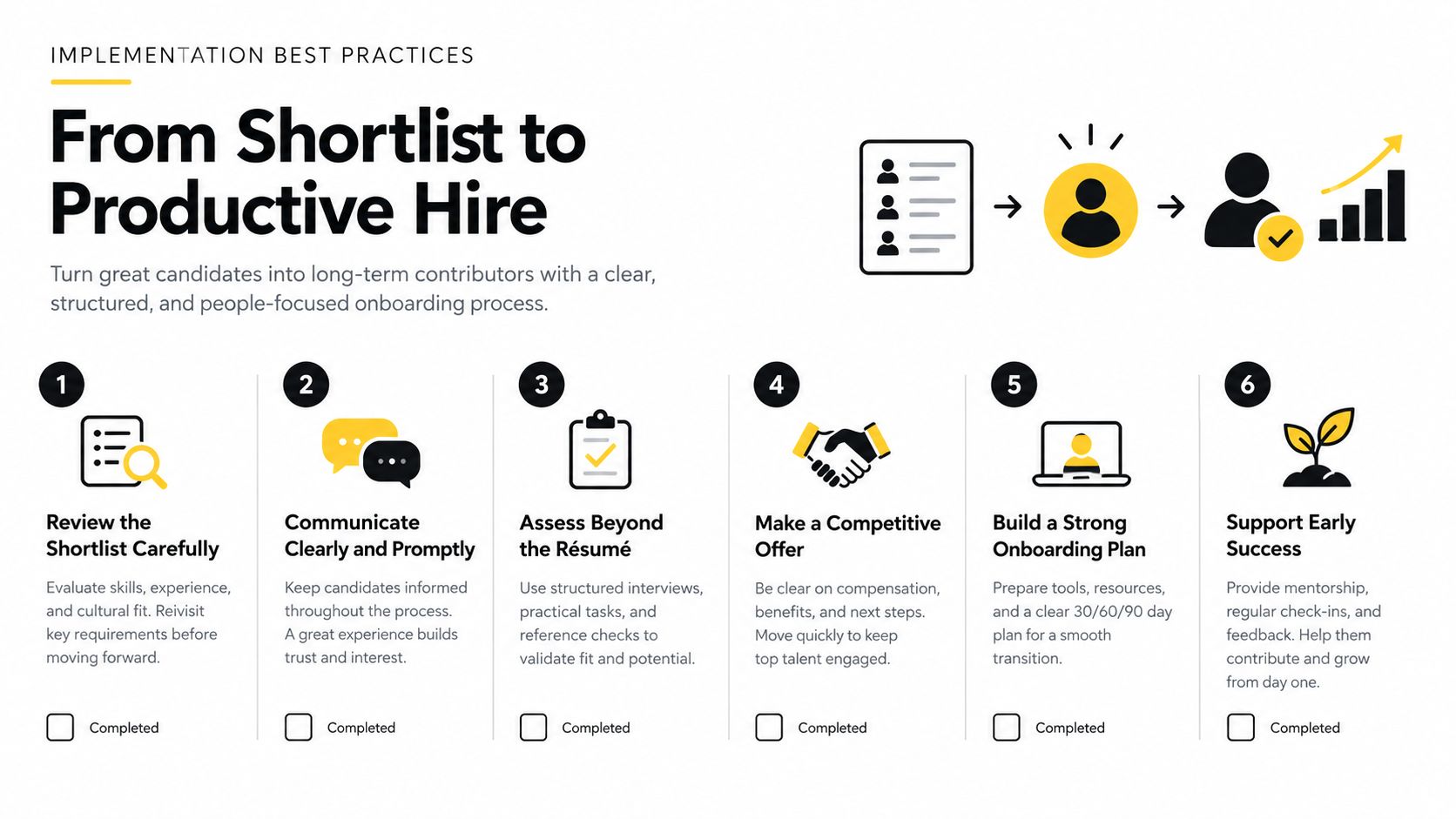
The first placement succeeds or fails before the candidate starts. Write the assignment as an operating document, not a broad request for “legal help.” List the matters covered, recurring tasks, prohibited activities, systems involved, expected availability, reporting relationship, and examples of acceptable completed work.
A practical intake should answer:
Keep the first assignment narrow enough to evaluate. If the firm needs support across three practice areas, identify whether one person fits all three or whether separate specialists would create less review work.
A strong interview tests communication, organization, and escalation habits. Ask the candidate to explain how they would respond when a client requests legal advice, a document is missing, or a deadline conflicts with another priority. The answer should show that the person recognizes limits and knows when to ask the supervising attorney.
Review the candidate's practical skills with a realistic exercise. For example, provide a redacted intake sheet and ask the candidate to organize the information into the firm's approved tracker. Evaluate accuracy, written clarity, and whether the candidate flags uncertainty rather than inventing an answer.
Give access according to the tasks assigned. Start with the systems and folders required for the first workflow, then expand permissions only after the professional demonstrates reliable handling of information. Use written procedures for naming files, recording communications, escalating urgent issues, and closing tasks.
Remote work doesn't create a relaxed privacy standard. If a worker accesses, handles, or transmits protected health information, HIPAA obligations are based on PHI access rather than physical location, and a signed Business Associate Agreement is required before access begins, according to guidance on HIPAA-compliant virtual medical assistants. Although this article focuses on law firms, firms supporting healthcare clients should confirm their own contractual and security obligations with qualified counsel or a compliance professional.
Set a communication rhythm that matches the work. A daily status note may be appropriate during a deadline-driven project, while a weekly review may suit recurring administrative support. Track open questions, completed outputs, rework, and issues requiring attorney intervention.
For LATAM hires, document the engagement structure, payment process, confidentiality terms, tax treatment, and applicable worker-classification considerations before the start date. Requirements vary by arrangement and jurisdiction, so use qualified legal, tax, and payroll advice rather than treating a platform's administrative support as a substitute for professional review.
The remote onboarding practices for legal teams should reinforce the same principle: the person needs a defined workflow, usable access, and a supervisor who is available when decisions arise.
A staffing decision should be measured against the problem it was meant to solve. If the issue was delayed intake, track completed intake work and response coverage. If the issue was a discovery backlog, measure completed organization tasks and attorney rework. If the issue was leave coverage, assess whether the team maintained its agreed service level without compromising supervision.
Operational platforms commonly expose metrics such as fill rate, time-to-fill, utilization, cost per assignment, compliance rate, and temporary-to-permanent conversion rate, as summarized in on-demand staffing software guidance. These measures don't replace legal judgment, but they help a manager compare assignments and identify where a staffing process is failing.
| KPI | What It Measures | Why It Matters for Law Firms |
|---|---|---|
| Fill rate | Whether approved requests receive suitable coverage | Shows if the talent pool matches the firm's actual role requirements |
| Time-to-fill | How long it takes to move from request to accepted hire | Helps assess whether the platform solves urgent capacity problems |
| Utilization | How much assigned time produces planned work | Identifies idle capacity, unclear scope, or weak delegation |
| Cost per assignment | The total staffing cost for a defined project or period | Supports comparison with direct hiring, overtime, or delayed work |
| Compliance rate | Whether required checks, agreements, and access controls are complete | Makes governance visible before sensitive work begins |
| Temporary-to-permanent conversion | Whether flexible assignments become longer-term engagements | Indicates when a trial arrangement may be developing into a permanent need |
HireParalegals is one specialized option for U.S. law firms. Its stated model connects firms with a curated network of over 10,000 pre-vetted legal professionals, with candidates averaging more than four years of experience, and describes a four-step process covering sourcing, interviewing, background checking, and skills validation. The service also states that firms can receive a shortlist within 24 hours. Those are vendor claims that a buyer should test against the specific role, availability, practice area, and engagement terms rather than treat as a guaranteed outcome.
The platform's legal focus is relevant because matching a paralegal to immigration, litigation, corporate, or family-law work requires more than a generic administrative profile. Its described model combines AI-assisted matching with human review and includes payroll management and compliance guidance for Latin American hires. A firm should still verify the precise checks performed, who handles supervision, what information may be accessed, and how disputes or replacement requests are managed.
Cost savings should be assessed as total operating cost, not hourly rate alone. Include manager review time, onboarding, software access, security controls, rework, payment administration, and the cost of an unfilled deadline. A lower rate isn't economical if attorneys spend substantial time correcting work or if the assignment creates confidentiality exposure.
The market is also moving toward formalized contingent workforce management. One market forecast projects the category at US$1.57 billion in 2026 and US$1.92 billion by 2031, with cloud deployment growing faster than on-premises systems, according to contingent workforce management market information. For law firms, that trend makes governance and integration evaluation more important, not less.
An on demand staffing platform can give a law firm flexible access to remote legal support when workload, specialization, or timing makes a permanent hire impractical. The model is most dependable when the firm defines the work precisely, filters for practice-area and timezone fit, validates practical skills, and keeps legal judgment with the responsible attorney.
Start with one bounded workflow, such as intake administration, discovery organization, or document coordination. Establish access rules, supervision, success measures, and payment terms before the assignment begins. Then review fill rate, time-to-fill, utilization, cost per assignment, compliance completion, and rework so the firm can decide whether to expand, revise, or end the arrangement.
If your firm is ready to evaluate a specific role, request a targeted shortlist from HireParalegals and use the interview process to test practice-area experience, communication, availability, and task boundaries before making a commitment.