
 14 minutes read
If you're trying to hire a paralegal in New York, NY, you already know the routine. You post the role, your inbox fills up with polished nonsense, a few decent resumes hide in the pile, and then you spend half your week trying to figure out who can draft, file, chase documents, and keep a lawyer out of trouble.
That's the actual mess. Not the job description. Not the comp package. The funnel.
New York is a big legal market, which is great until you have to sort through it like a raccoon at a recycling center. The traditional way of hiring paralegals in this city burns time, invites credential inflation, and usually costs more than people admit up front. If you've ever wondered why a “simple hire” eats three weeks and a stack of follow-up emails, you're in the right place.
The worst part of hiring a paralegal in New York is how innocent it looks at the start. You write a job post, maybe tighten up a few bullet points, and think you've done your part. Then the resumes arrive, and somehow half of them read like they were assembled by a committee that never met a law office.
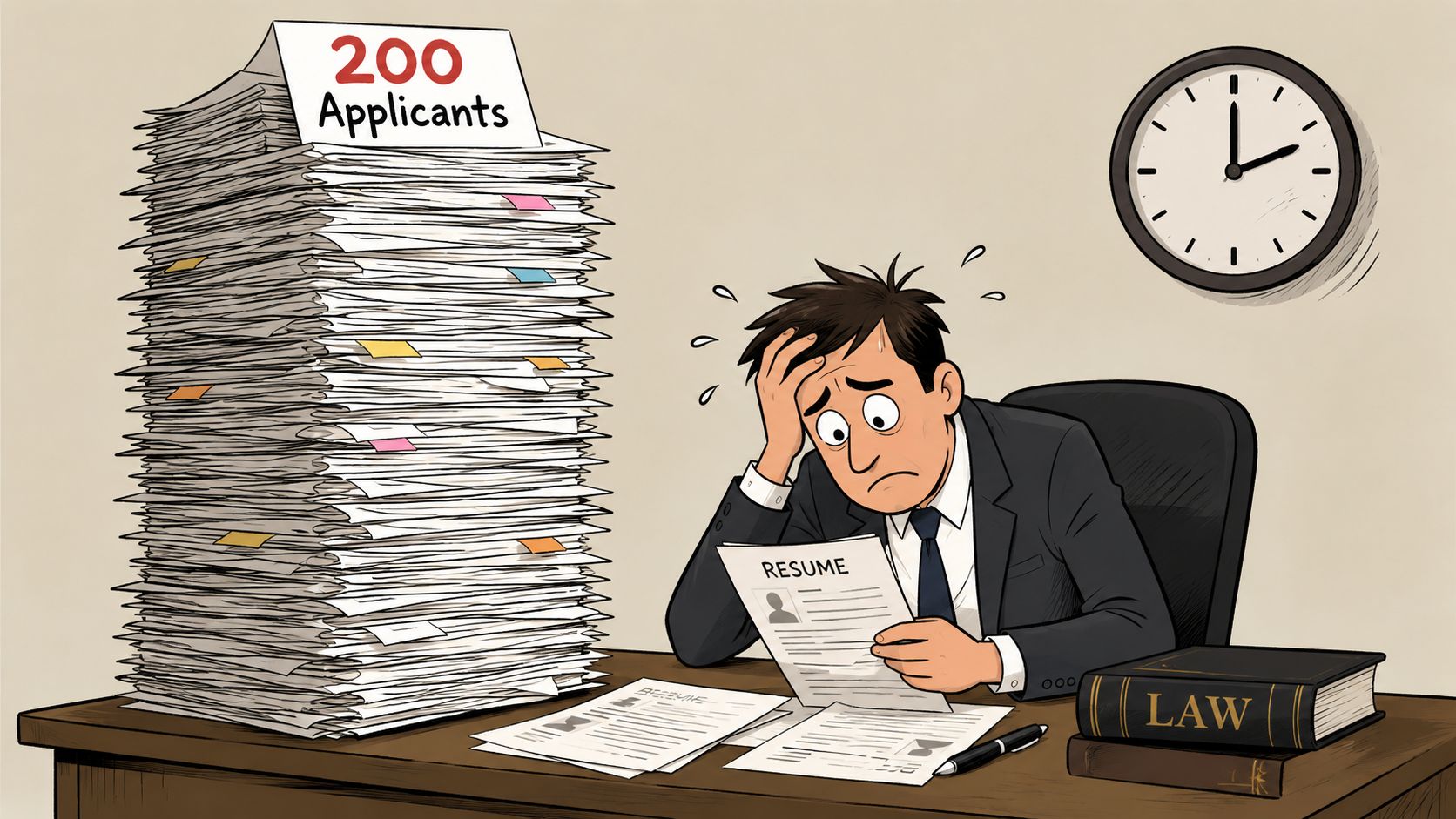
The cost isn't the posting fee. It's the time sink. Every resume that looks promising needs a call, every call needs another call, and every “I'm very interested” email turns into a calendar game of telephone. By the time you've done the dance, you've lost actual billable attention, which is the expensive part nobody puts in the spreadsheet.
Then comes the billing-rate shock. In New York, legal support isn't cheap because the market isn't cheap. The city also has a lot of competition for capable staff, so firms end up paying for urgency whether they mean to or not.

Practical rule: if the hire only looks inexpensive on paper, you probably haven't counted the time you'll spend fixing the bad fit later.
New York is a deep paralegal market, but depth doesn't equal ease. The state had 30,930 paralegals and legal assistants employed with an average annual wage of $78,850, and the New York-Newark-Jersey City metro had 32,460 with an annual mean wage of $80,240 and a location quotient of 1.46 according to the Bureau of Labor Statistics. That's a concentrated market, not a casual one. (BLS wage data for New York paralegals)
The practical problem is that traditional recruiting treats this like any other admin hire. It isn't. If you're comparing it to something like a receptionist search, even that role's salary research helps show the gap in expectations and screening intensity, which is why what receptionists earn in New York is a decent reality check for anyone tempted to underprice legal support.
I also keep seeing firms get trapped by process theater. Job boards, generic recruiter outreach, and endless back-and-forth feel busy, but they don't prove competence. That's why curated sourcing matters more than ever, especially if you've already had enough of hiring whiplash and want a more direct route like legal staffing in New York.
The New York market is large, competitive, and split into different realities depending on practice area. If you hire like every paralegal does the same thing, you'll overpay in some areas and under-screen in others. That's how firms end up with expensive mismatches and a fresh stack of regrets.
The BLS data gives you the broad labor picture. New York State employed 30,930 paralegals and legal assistants with an average annual wage of $78,850, while the New York-Newark-Jersey City metro employed 32,460 with an annual mean wage of $80,240 and a location quotient of 1.46. That concentration tells you two things, there's a deep pool, and everybody else is fishing in it too. (BLS wage data for New York paralegals)
Independent labor summaries for the metro area show 29,300 paralegals and legal assistants in May 2024 with a median wage of $73,470, which lines up with the basic truth of the market, pay depends heavily on the kind of legal work involved. Corporate, securities, IP, and complex commercial litigation tend to sit above the middle. Immigration, family law, and legal aid often sit below it. (NYC paralegal demand and pay by practice area)
That split matters because firms don't hire “a paralegal.” They hire a workflow. A litigation-heavy shop needs someone who can live in discovery. A corporate team needs polish, speed, and document discipline. A family or immigration practice often needs stamina and client sensitivity more than glossy resume language.
New York's 2024 Access to Justice Commission report says non-lawyer staff at civil legal organizations, including paralegals, are “severely under-compensated”, and that contributes to attrition while many New Yorkers still face civil legal problems without adequate help. That's not just a public-interest problem, it's a labor-market problem. Legal aid and housing practices lose people to higher-paying private work, and the talent pool gets squeezed harder. (2024 Access to Justice Commission report)
The smart read on NYC hiring is simple. Don't ask whether a paralegal is “good.” Ask which practice area they've survived, what they've actually done, and whether your firm's work rhythm matches theirs.
| Metric | Value |
|---|---|
| New York State employment | 30,930 paralegals and legal assistants |
| New York State average annual wage | $78,850 |
| NYC metro employment | 32,460 paralegals and legal assistants |
| NYC metro annual mean wage | $80,240 |
| NYC metro location quotient | 1.46 |
| NYC metro median wage | $73,470 |
| NYC metro employment in May 2024 | 29,300 paralegals and legal assistants |
If you're budgeting blindly, you're already behind. If you're hiring for a premium practice area, expect premium expectations. If you're hiring for legal aid or immigration, expect a tougher retention story and a thinner margin for error.
New York gives you no state paralegal license to lean on, which is both liberating and annoying. Liberating because nobody can hide behind a shiny license they never earned the hard way. Annoying because now you have to do the adult work and vet people.
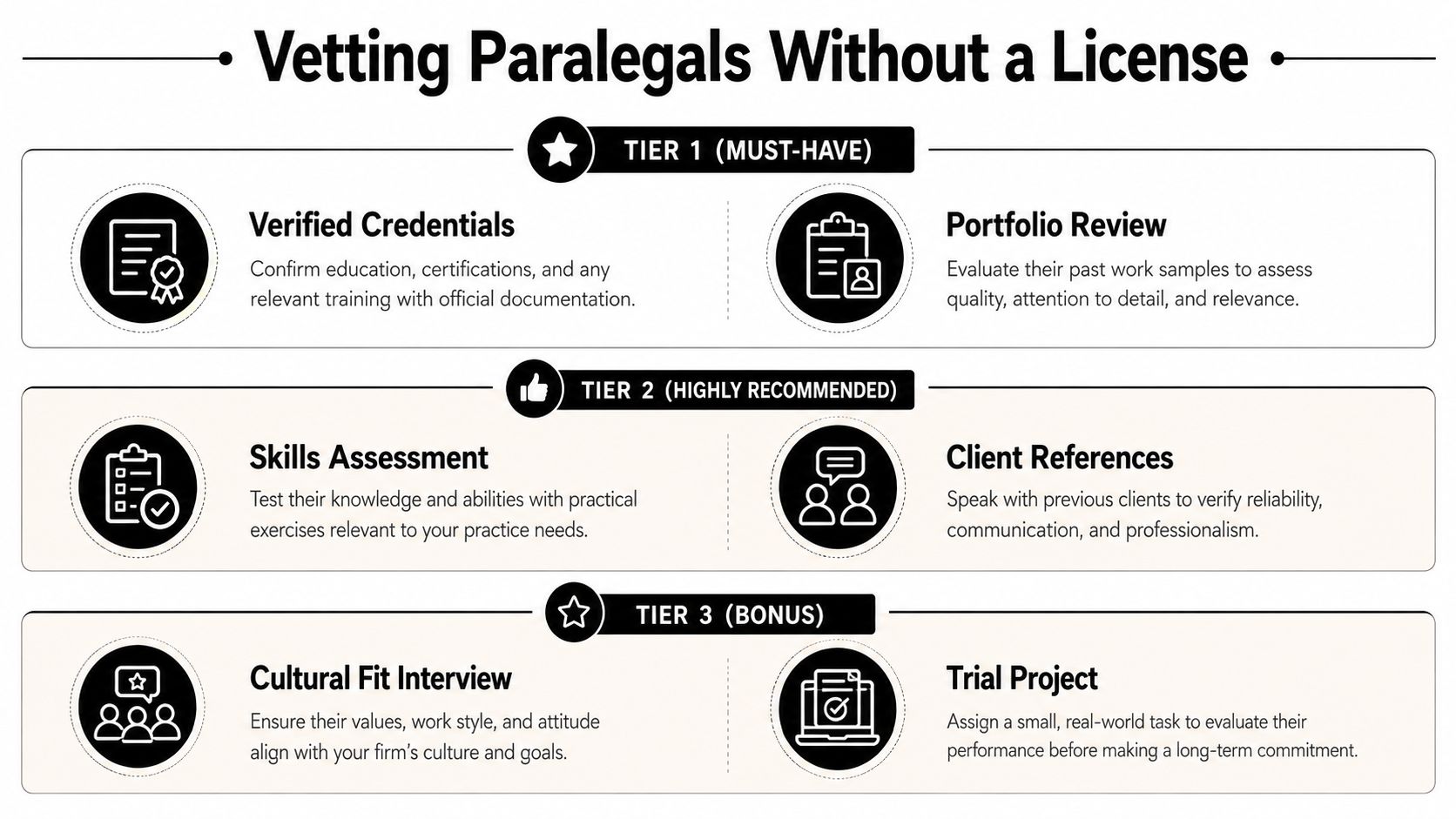
The cleanest public benchmark is the city's Paralegal Aide specification, which requires either a baccalaureate degree, or an associate degree or 60 semester credits plus 2 years of full-time satisfactory paralegal experience, or a high-school diploma plus 4 years of full-time satisfactory experience. That's a useful reminder that New York screening is really an education-plus-experience matrix, not a license chase. (NYC Paralegal Aide specification)
The state's certification framework points in the same direction. The Empire State Certified Paralegal path recognizes combinations like an associate degree plus 6 years of substantive experience, a bachelor's degree plus 3 years, a bachelor's degree in any subject plus a paralegal certificate and 3 years, or a high-school diploma plus 12 years of substantive experience for older applications. That's not random. It's a ladder built around real work history. (Empire State Certified Paralegal framework)
A certificate by itself is not a hire. It's a signal, sometimes a useful one, but still just a signal. In New York, firms should validate actual task-based experience, drafting, filing, discovery support, case management, and attorney support. Generic clerical work is not the same thing, and anyone who pretends otherwise is selling you a headache with a nice resume attached.
If you want a more formal checklist for screening, the state's occupational standards for 29-003 Paralegal require a high school diploma or equivalent plus 2 years of full-time paralegal work experience, along with completion of a degree or certificate program at an approved school. That tells you where the floor sits, and it's higher than a lot of managers think. (NYSED legal careers 29-003 Paralegal)
A 30-minute skills test tells you more than a fancy cover letter ever will. Give a document assembly task, a short discovery review, or a simple issue-spotting exercise tied to your practice area. If they freeze, bluff, or wander into admin-only territory, you've learned what you needed to learn without wasting a month.
A clean background check isn't a vibe, it's a safeguard. If you're dealing with client money, sensitive data, or live cases, verify identity, employment history, and any issue that could affect trust before the person touches your files. For a solid practical reference on process and scope, personal background checks explained is a useful starting point.
My rule: if a candidate can't explain exactly how they've handled documents, deadlines, and attorney direction, they're not ready. Titles are cheap. Task history is what matters.
If you're building a screening pipeline, credential verification services are worth using as a backstop, not a substitute for judgment.
The old playbook starts looking tired. Traditional hiring asks you to post, wait, sort, interview, chase references, and hope the person sticks. On-demand platforms ask you to buy vetted capacity and get back to work. One of those models fits a modern legal practice better than the other, and it's not the one that keeps you hostage for six weeks.
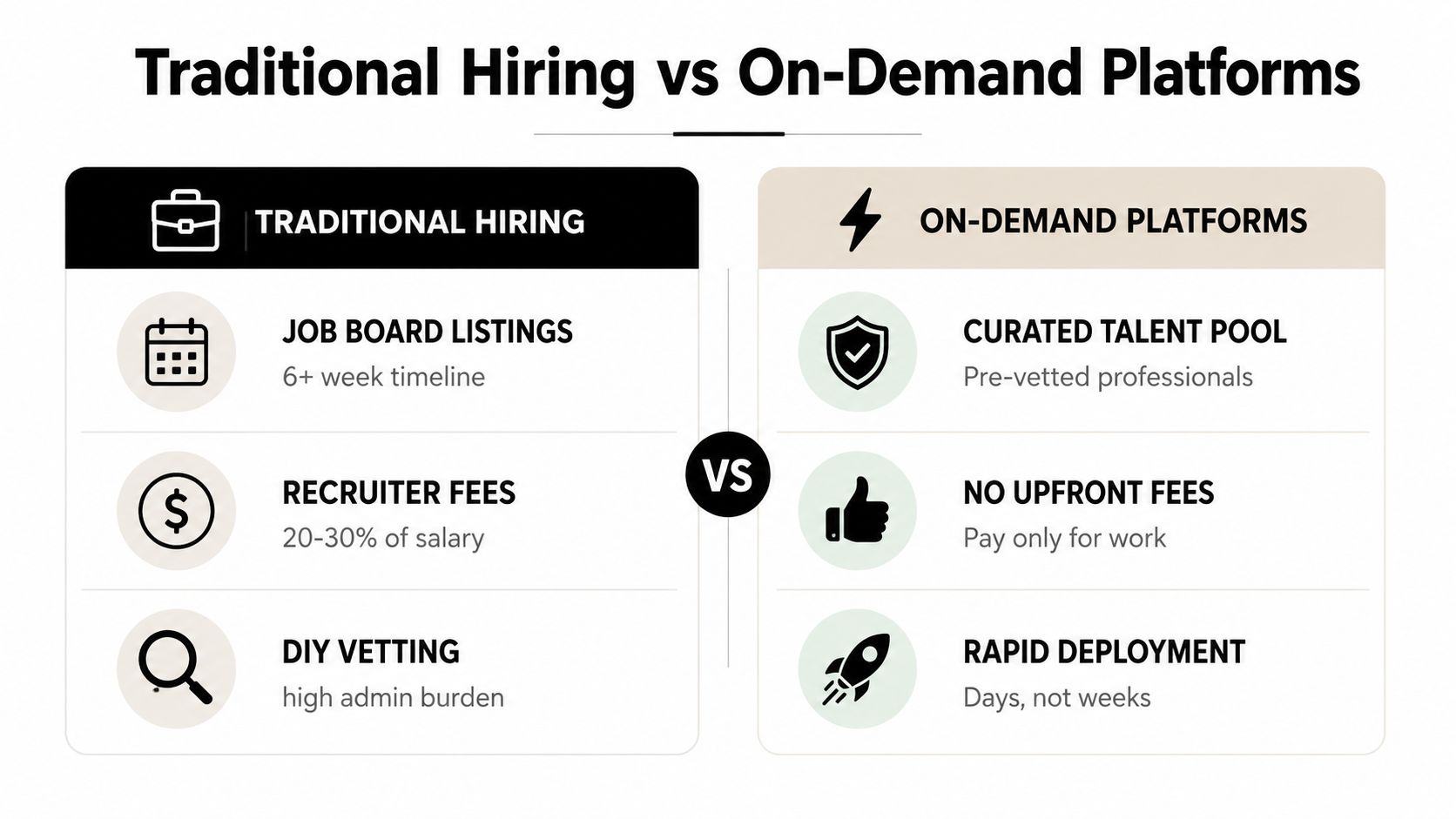
Traditional recruiting looks cheaper because the bill arrives in pieces. There's the job board cost, then the recruiter fee, then your time, then onboarding drag, then the pain of a bad hire. Add payroll compliance, training, and replacement risk, and the “cheap” hire starts acting like a very expensive hobby.
Curated on-demand models change the math because they compress the sourcing and screening work into a smaller window. HireParalegals, for example, operates as a curated network of pre-vetted legal talent, with sourcing, interviewing, background checking, and skills validation already built into the process. That means you're not building the funnel yourself, and that alone saves a ton of administrative nonsense. I'm mentioning it once because it's a concrete example, not because every firm needs the same setup.
Traditional hiring usually means waiting, then hoping. On-demand hiring means evaluating a shortlist that already passed the basic professional filters. The practical difference is whether your team spends its energy on candidate search or on actual legal work.
The platform model also gives firms a cleaner way to match talent to need. If you need immigration support, you don't care about someone's ability to survive a generic HR screen. You care whether they know filings, client follow-through, and the tempo of immigration work. Same story for litigation, corporate, or family matters. The practice area decides the fit.
Remote paralegals can also solve a brutal New York problem, payroll pressure. HireParalegals says firms can cut payroll costs by up to 80% while staying aligned to local work hours and time zones. That kind of savings changes what a small or mid-sized firm can say yes to, especially when the alternative is mortgaging your office ping-pong table for another round of recruitment theater. (HireParalegals overview)
Bottom line: if your work is urgent, seasonal, or specialized, waiting weeks for a traditional hire is usually self-inflicted pain.
For the exact workflow of a remote legal hire, the difference comes down to speed and verification. Curated platforms remove a lot of the guesswork, especially when the firm needs coverage now and doesn't have the bandwidth for a full search.
A good hire can still flop if your onboarding is a mess. Remote legal support doesn't need more mystique, it needs cleaner handoffs, fewer assumptions, and a manager who can answer questions before they become bottlenecks.
Start with access, not enthusiasm. Give the new paralegal the systems they need, the conflict-check process, the confidentiality paperwork, and a plain-English map of how your office runs. If they can't get into the tools, they can't help you, and if they don't understand confidentiality, you've already created risk.
Remote teams also need a secure communication habit from day one. If your firm uses AI tools, be careful about what gets shared and where. The confidentiality risks around shared chat links and client data are real enough that legal staff should treat them like they'd treat any other sensitive file. I'd rather sound boring than explain a leak to a client.
Don't vanish after the welcome email. Set a communication cadence, assign one point of contact, and define what “done” looks like for the first few tasks. Paralegals hate ambiguity because ambiguity turns into rework, and rework turns into attorneys muttering at their monitors.
Use the first week to train by task, not by theory. Immigration support needs a different ramp than litigation support, and corporate work needs different document habits again. If you want a practical structure for the remote side, how to onboard remote employees is a decent reference point for keeping the handoff orderly.
By the end of the first month, the paralegal should be moving inside your workflow, not hovering around the edges of it. That means performance feedback, one or two real corrections, and a clear signal about what they own versus what still needs review. If your onboarding never reaches that point, you hired a person and forgot to integrate them.
A simple feedback loop works better than grand management theory. Ask what slowed them down, what they still don't know, and where your process wastes time. You'll learn more from that than from a dozen “just checking in” messages.
Useful habit: remote legal work gets smoother when managers stop treating onboarding like a ceremony and start treating it like systems setup.
If you need a paralegal in New York, your decision shouldn't start with “Where do I post?” It should start with “How fast do I need competent help, and how much risk can I tolerate?” That's the core question, not the romance of hiring.
If you're a solo practitioner or a small firm with urgent litigation, corporate, or immigration work, I'd skip the long traditional search unless you enjoy losing weeks to scheduling. The New York market is deep, but it's also crowded, and the public hiring process tends to attract more noise than signal.
If you're a mid-sized firm with repeatable support needs, the more efficient path is usually a curated shortlist from a vetted talent pool. The reason is plain. You care about task capability, timezone fit, and reliability, not about collecting twenty polite maybes from a job board.
The other thing to remember is that New York's hiring standards are more demanding in practice than in law. The city's public specifications and the state's certification routes both point toward education plus substantive experience, which means the best hires usually show you a trail of work, not just a polished profile.
Use traditional recruiting only when you have time to burn and a strong internal screening process. Use curated on-demand hiring when you need to move quickly, need specialty support, or want to avoid the usual circus. For most firms, especially the ones that live and die by responsiveness, the second option is just smarter.
Before you commit to anyone, check the following: documented experience, task-specific competency, clean references, and a realistic onboarding plan. If those four pieces aren't there, keep looking.
If you're hiring a paralegal in New York, NY right now, stop treating the search like a public audition. Pick the route that matches your workload, verify the work that matters, and get someone productive before the calendar turns into a crime scene.