 16 minutes read
A strong summer 1L internship doesn't have to be a BigLaw summer associate position. At Harvard Law School, only 26% of reported summer 2025 placements for members of the Class of 2027 were at law firms. Government employers, judicial offices, and nonprofits accounted for most of the remaining placements, according to Harvard Law School's 1L employment outcomes.
That should change how you approach the search. A 1L summer position is a structured legal placement after your first year, which might be a firm fellowship, judicial internship, government role, public-interest job, in-house position, research role, or smaller-firm job. Your goal isn't to win the most prestigious title. Your goal is to leave the summer with stronger legal skills, credible references, useful writing, and a realistic path into your 2L recruiting cycle.
The process also starts earlier than many first-years expect. Firms increasingly recruit through direct applications and rolling processes rather than relying only on law-school interview programs. This guide explains where 1Ls work, how to build a deadline-resilient timeline, what makes an application readable, how to recover if you discover recruiting late, and how to turn any legitimate legal placement into a stronger 2L opportunity.
A summer 1L internship is legal work performed between the first and second years of law school. The position may involve legal research, drafting, client or party communication, court observation, regulatory work, case preparation, policy analysis, or supervised administrative support. The placement can be paid or funded through a fellowship, and it doesn't need to be at a large private firm to strengthen your long-term employability.
The first distinction to understand is the difference between the 1L pipeline and the 2L pipeline. Large private firms generally hire most entry-level associates through summer programs held after the second year of law school. A 1L position may lead to a 2L return invitation, but it isn't automatically a post-graduation associate job. LSAC's explanation of 1L and 2L recruiting makes this distinction clear, including the difference between a first-year return opportunity and a later post-graduation offer.
Recruiting now moves before many students have a settled view of their grades, practice interests, or preferred market. In NALP's survey of law-firm recruiting for the 2024 summer class, 78% of summer-program offers were made before August in 2024, compared with 45% in 2023. July accounted for 45%, June for 30%, and August for 20%, according to NALP's recruiting analysis.
That timing makes a passive strategy expensive. Don't wait for your school to finish organizing on-campus interviews, and don't assume spring grades will create your first useful opportunity. Prepare your materials during the first semester, understand which programs recruit on a rolling basis, and run several application channels at once.

Practical rule: Treat a 1L search as an early talent pipeline, not as a single interview week.
A formal firm program can be valuable, especially when it offers substantive assignments, attentive supervision, and access to lawyers in your target practice group. But a judicial internship can produce an excellent writing sample, a government position can expose you to regulation or litigation, and a public-interest role can give you client-centered experience. Evaluate the work you can do, not just the employer name on the résumé.
The numbers make the point: a 1L summer does not have to run through BigLaw. Harvard's reported outcomes for 571 members of the Class of 2027 working during summer 2025 included 32% in government jobs other than judicial offices, 8% in judicial positions, and 25% in nonprofit organizations, alongside 26% at law firms, as shown in Harvard's placement breakdown. Other placements included business or industry, academic employers, military positions, and other employers.
Those figures do not choose your job for you. They show that firm hiring represents only one part of the market. Judge each opportunity by the work, supervision, writing, and relationships it will produce.
| Placement Type | Skill Development | Writing Samples | Compensation | 2L Recruiting Value |
|---|---|---|---|---|
| Firm fellowship or 1L program | Research, drafting, deal or litigation exposure, professional workflow | Often available, subject to confidentiality | Varies by employer and program | Strong when assignments and evaluations are substantive |
| Judicial internship | Legal research, neutral analysis, opinion or bench-memo writing | Frequently useful after approval | Varies by court and funding | Valuable for litigation, clerkships, and research-intensive practices |
| Government agency | Statutory analysis, investigations, regulation, public administration | Often possible with permission and redaction | Varies by agency and funding | Useful for regulatory, litigation, policy, and public-sector paths |
| Public-interest organization | Client service, advocacy, research, community-facing work | May be available depending on confidentiality | Often depends on fellowship or school funding | Strong for public interest and mission-driven practices |
| Faculty research role | Research design, source checking, writing, citation discipline | Potentially strong if the professor permits it | Varies by school and professor | Useful when aligned with a target subject or professor reference |
| Small firm or in-house role | Broad exposure, practical workflow, client or business context | Depends on the work and confidentiality | Varies significantly | Helpful with close supervision and concrete assignments |
A judicial internship can sharpen research and writing. Government work can expose you to statutes, investigations, regulation, or litigation. Public-interest work can provide client contact and advocacy experience. A small firm or in-house role may give you broader responsibility than a narrowly defined program. Faculty research can build subject-matter knowledge and a strong professor reference.
Large firms may offer the clearest route into a 2L summer class, but the available 1L seats are limited. The Berkeley Law recruiting guide reports that firms typically hire fewer than one 1L for every nine 2Ls, and the Berkeley recruiting guide explains why missing a 1L firm offer is not a career verdict.
Use this test before accepting any placement:
A prestigious title with little feedback is weaker than a less glamorous role where you research real issues, write carefully, and earn a detailed reference. Choose the position that gives you evidence for your next application, not merely a name for your résumé.
Treat recruiting as a weekly process, not a single spring event. During your first semester, choose practice areas to test, geographic markets you can realistically reach, and employer types that fit your goals. You do not need a permanent career decision. You need enough direction to explain why you are applying to a litigation boutique, prosecutor's office, agency, nonprofit, or firm practice group.
Before spring recruiting begins, prepare a one-page résumé, transcript, writing sample, and references. Ask a legal writing professor whether your memo can be revised for professional use. Confirm that a prior supervisor or professor will respond to employer inquiries. Keep a master résumé, then adjust the submitted version for each position.
Use direct employer applications and school-sponsored programs. NALP reported that 91% of law-firm offices accepted direct applications, while only 44% of 2024 summer-associate offers originated in law-school recruiting programs, as noted in NALP's 2025 perspectives report. These figures use different bases, offices for the first measure and offers for the second, so they should not be read as parallel shares of one population.
Your school's calendar may be too slow for a particular employer. K&L Gates says its 1L applications typically open in October or November, are reviewed on a rolling basis, and close on January 31, according to its U.S. summer associate program information. The same page describes a typical U.S. summer program as ten weeks, with possible split-summer and academic-bonus terms. Read each program's written terms before making plans around it.
Track every application in Airtable, Notion, or a well-maintained spreadsheet. A dreach AI agent for recruiters can organize candidate workflows for hiring teams, but your process still requires judgment and individualized submissions.
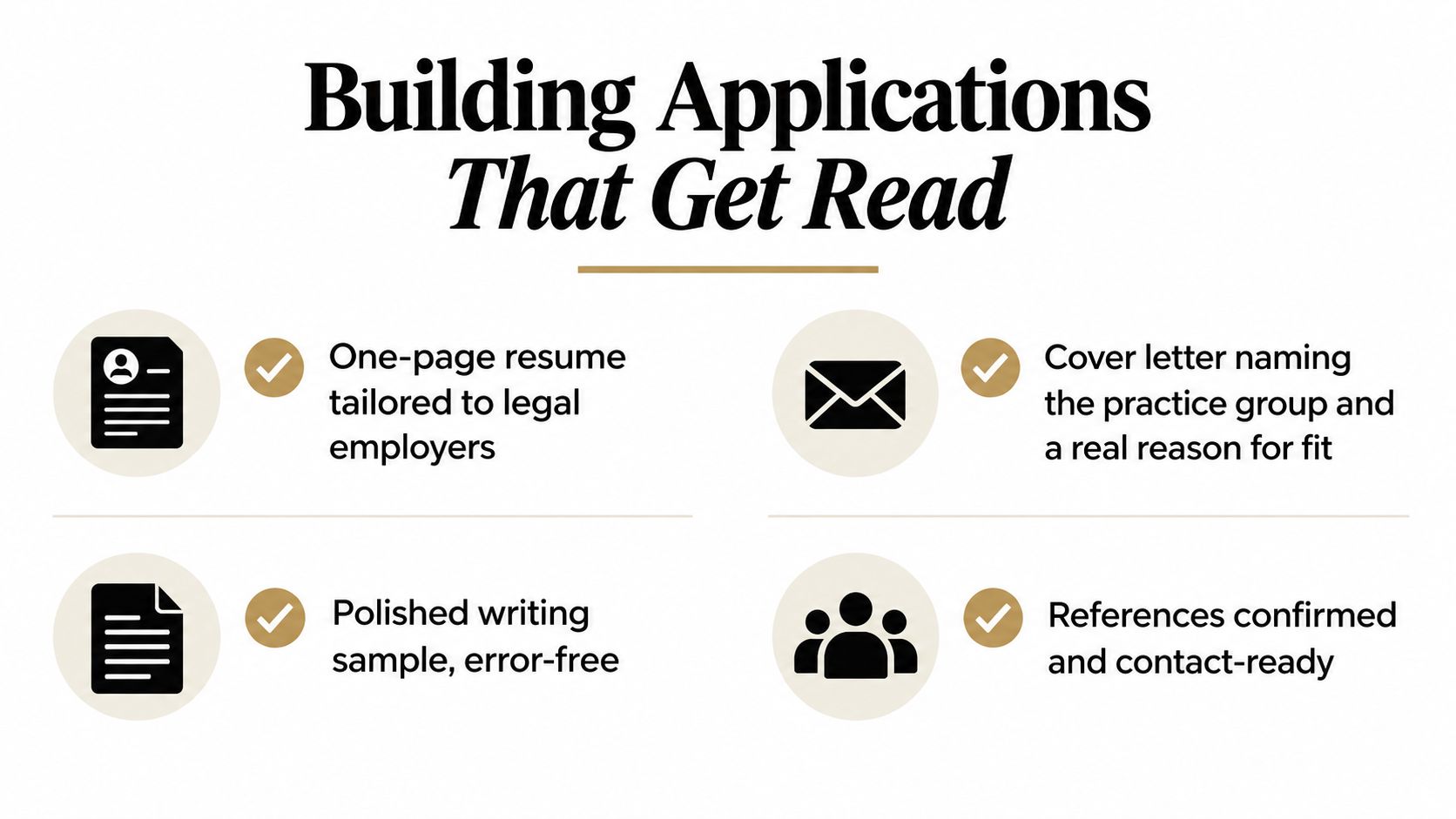
The application checklist below condenses the weekly rhythm into one view.
If recruiting starts late, widen the list instead of waiting for a prestigious slot. Review legal intern career opportunities alongside firm, judicial, government, public-interest, and paid legal-support openings. A late offer can still provide useful work, a supervisor reference, and time to prepare for the next recruiting cycle.
Your application has one job at the start: make the reader understand what you can contribute and why this employer makes sense for you. A one-page résumé should prioritize legal writing, research, analytical work, client-facing experience, leadership with real responsibility, and technical skills relevant to the role. Remove dense descriptions that force a recruiter to decode what you did.
The cover letter should name the practice group or office when that information is available. Give one credible reason for the fit, such as a course, prior work, research project, geographic connection, or demonstrated interest in the employer's type of matters. Don't write a generic letter that could be sent unchanged to every firm.
Your writing sample needs to be polished, current, and permitted for professional use. Confirm that it contains no confidential information, correct citations, clear organization, and no unexplained professor comments. If you use a law-school memo, revise it for an external reader who doesn't know the assignment prompt.
Direct applications deserve as much attention as on-campus recruiting. Apply through employer portals, school listings, career-services programs, bar-association opportunities, public-interest fellowship channels, and targeted outreach to smaller firms. Smaller employers may not post a formal 1L program, so a concise email to a managing attorney or recruiting contact can uncover work that never reaches your school's interview calendar.
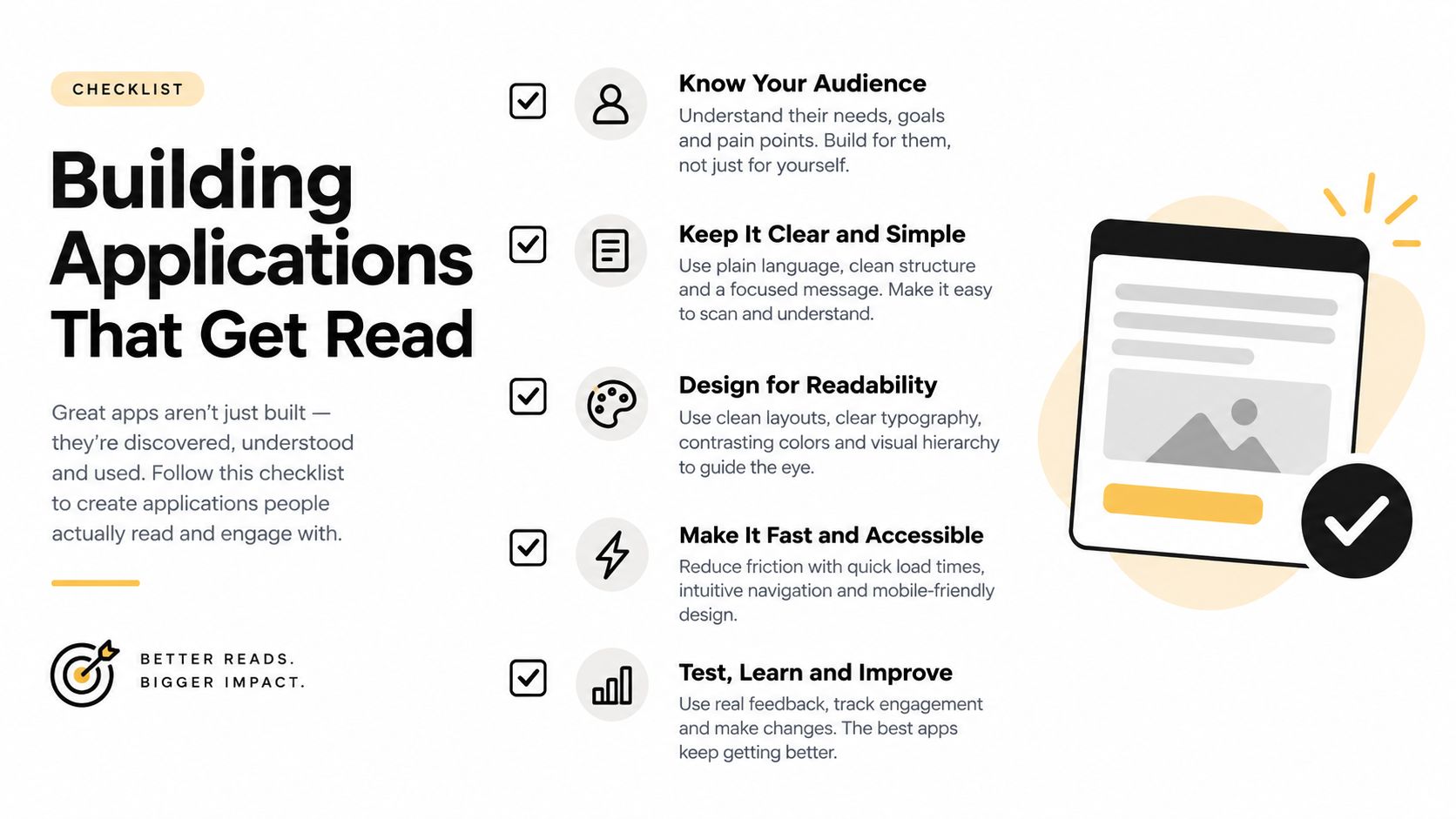
Before sending each application, run this quality-control check:
A 1L summer associate role and a 2L return-track role are not interchangeable. Ask what the employer expects from the position and what, if anything, happens after the summer. For general application preparation, these law school application tips can help you tighten the presentation of your background, although an employer application needs to be shaped for legal work rather than copied from a school application.
Avoid the most common failure pattern: submitting a large batch of generic materials after grades arrive and assuming the market will wait. A smaller number of thoughtful applications, submitted across multiple channels and tracked consistently, gives you more useful feedback and more opportunities to adjust.
“Network early” is incomplete advice. It assumes you knew whom to contact, what deadlines mattered, and how legal hiring worked before the process began. A survey of more than 2,000 1L students across 196 law schools found that 88% knew about BigLaw recruiting timelines, but only 25% knew about them before law school, while 12% still lacked awareness when surveyed. The same research found that 55.5% said accelerated recruiting negatively affected their first-year experience, as reported in the LSAC and NALP report on student awareness.
Career services matter, but they aren't your only information source. That report found that 58.1% learned recruiting timelines from career services, 40.1% from current or former students, and 28.2% from faculty, using the same source. Build your own network so one missed email or late appointment doesn't eliminate your options.

If you missed a major deadline, don't spend weeks regretting it. Create a new list based on employers that can make decisions outside the formal recruiting calendar.
A direct outreach email can be simple: “I'm a first-year student at [school] seeking supervised summer legal work in [area]. I'm available from [dates], and my experience with [specific skill] may be useful to your office. I've attached my résumé and writing sample. Would you be open to a brief conversation about current or upcoming student needs?”
Send a small, targeted batch, follow up once, and move to the next group. Late discovery is a scheduling problem, not a reason to abandon the search.
Most 1L interviews test whether you can explain your interests, communicate clearly, exercise judgment, and work reliably. You may receive questions about a class, writing assignment, prior job, difficult decision, or reason for choosing a practice area. Prepare concise examples, but don't recite a script.
Before an interview, review the employer's practice areas and identify the work a first-year student might realistically perform. Practice with a professor, upper-class student, or career adviser. Ask questions that show you care about the actual experience:
If a traditional offer doesn't arrive, pursue paid or funded alternatives without pretending they're identical to a firm program. Remote legal research, litigation support, compliance work, supervised document review, and legal administrative support can build practical habits and produce references. The role must remain within the student's training and the supervisor's instructions.
A law student shouldn't diagnose legal issues for clients, provide unsupervised legal advice, sign filings as a lawyer, negotiate independently, or hold themselves out as licensed counsel. Responsibilities, confidentiality rules, supervision requirements, and unauthorized-practice restrictions can vary by jurisdiction, so confirm the arrangement with the supervising attorney and, where needed, qualified counsel.
Paid legal internship opportunities can be one place to review remote support roles for U.S. firms. HireParalegals connects legal professionals with remote legal-support work, which may include research assistance, case organization, document support, or administrative tasks under appropriate supervision.
Treat paid support work as a strategic building block when it produces concrete work and a credible reference. Treat it as a weak option when the employer offers no supervision, no defined responsibilities, or pressure to perform work reserved for licensed attorneys.
The strongest summer 1L internships strategy is parallel, early, and skills-focused. Apply to firms, but also pursue judicial offices, government agencies, public-interest organizations, faculty research, smaller firms, in-house roles, and supervised paid legal support. The right summer is the one that gives you work you can explain, feedback you can use, and references who can speak specifically about your performance.
If you do obtain a formal firm summer position, use it deliberately. Clarify evaluation criteria during your first week, ask for assignments connected to your target practice group, and keep an assignment log recording the issue, rule, research path, deliverable, supervising lawyer, and feedback. Request midpoint feedback instead of waiting for the final evaluation.
NALP reported that 91% of 1L summer associates received offers to return for a 2L summer in 2025, 75% accepted those offers, and 79% of accepted return-offer recipients were expected to spend the entire 2L summer with the same firm, according to NALP's 2025 return-offer report. Those figures apply to students already selected for formal firm programs. They aren't the odds that an applicant will obtain any internship, so keep your parallel search active until a return offer is written and accepted.
Don't measure your summer by whether it matches someone else's prestige ranking. Measure it by the legal skills you develop, the supervisors who can recommend you, and the next door it opens.
If you need supervised remote legal-support experience while continuing your broader search, review HireParalegals' available roles and define the skills, schedule, and practice area you want to build this summer.