 18 minutes read
Your inbox already has one. Maybe five. One from opposing counsel that reads like it was assembled by three anxious associates and a malfunctioning precedent database. One from a founder who downloaded a template and decided every fact known to mankind is “strictly confidential in perpetuity.” One from your own team, asking if the old form is “good enough.”
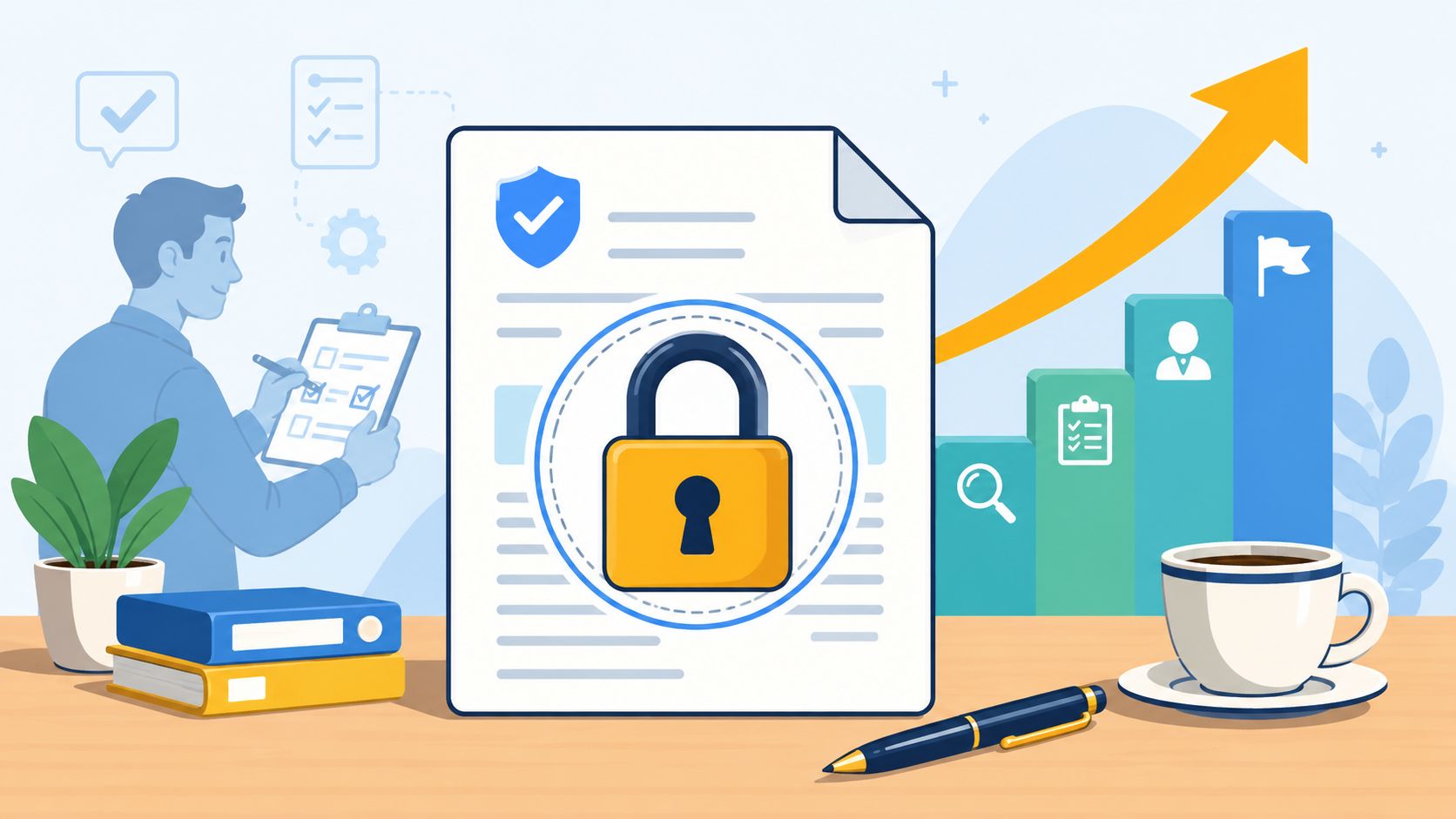
That's the core problem with confidentiality agreements. Not that they exist. They have to. The problem is that most firms still handle them like loose change in a desk drawer. Everyone touches them. Nobody owns the process. Senior lawyers burn time on low-value edits, juniors inherit bad forms, and clients get billed for chaos dressed up as caution.
I've seen good lawyers waste serious hours arguing over garbage provisions that never should've made it into the draft. Toot, toot. I've also seen the opposite: a tight system, a real checklist, delegated first-pass review, and only the materially risky issues escalated to the attorney who should be using their brain on strategy instead of line 47(b).
Monday morning. Coffee in hand. Inbox open. There it is again: “Please review attached NDA ASAP.”
Nobody smiles at that email. Nobody says, “Wonderful, another 20 pages explaining that public information is somehow secret.” You open the draft, scroll past the throat-clearing recitals, and start hunting for the same landmines you hunted yesterday.
That feeling isn't irrational. Confidentiality agreements are everywhere. In fact, confidentiality agreements are the most common employment restriction in the United States, covering approximately 57% of U.S. workers and used by roughly 88% of employers, according to legal scholarship summarizing survey data and related research. So yes, they're a fixture. They're not going away. Complaining about that is like complaining that diligence folders are full of documents.
Here's the visual most lawyers know a little too well:

The NDA itself usually isn't the crisis. The workflow is. Firms treat confidentiality agreements as one-off interruptions instead of a repeatable operational task. That's why the same issues keep showing up:

Practical rule: If your firm handles confidentiality agreements by email thread and memory, you don't have a legal process. You have a scavenger hunt.
The contract is one layer. The handling of the information is the other. That second layer gets ignored until somebody forwards a draft to the wrong person, uploads a deal deck to the wrong workspace, or uses unsecured collaboration habits that would make any privacy officer twitch.
If you want a useful non-legal companion piece on the operational side, the LocalChat blog on data protection is worth a read. It's a practical reminder that confidentiality fails in process long before it fails in court.
So no, this isn't a therapy session for lawyers buried in NDAs. It's an intervention. Stop treating confidentiality agreements like bespoke snowflakes. Most of them should move through a disciplined system, with only key judgment calls landing on your desk.
Most confusion around confidentiality agreements starts with a basic mistake. People grab the wrong type of agreement, then spend the next week negotiating around a problem they created on page one.
This part is simple. There are two common setups. A one-way NDA is a one-way street. One party discloses. The other receives and protects. A mutual NDA is a two-way handshake. Both parties are sharing, both parties are receiving, and both sides need protection.
Here's the visual version:

Use a unilateral agreement when reality is unilateral. A significant concept, I know.
A startup pitching proprietary product architecture to a potential investor? One-way often fits. A company sharing internal financials with an outside consultant? Also one-way. Same for employee access to customer lists, pricing strategy, source code, or draft product plans.
A one-way form is cleaner when only one side is exposing sensitive material. It narrows the obligations and reduces pointless drafting noise.
Use it when:
Mutual agreements fit actual collaboration. Joint venture talks. Strategic partnerships. Vendor selection involving architecture access on both sides. Settlement discussions where each side may produce internal assessments and business terms. If both parties are opening the kimono, use the two-way handshake.
Here's the trap. Lawyers often insist on mutual forms because they feel “fair.” Fairness is not the test. Facts are the test. If one side isn't really sharing anything sensitive, a mutual NDA can become ceremonial paperwork with extra drafting friction.
If the deal is one-sided, don't draft a balanced masterpiece. Draft the right instrument.
| Situation | Better fit | Why |
|---|---|---|
| Investor review of founder materials | One-way | The startup is disclosing, the investor is mainly evaluating |
| Outside consultant reviewing internal processes | One-way | The consultant receives protected business information |
| Product collaboration between two companies | Mutual | Both sides may exchange technical and commercial information |
| Early vendor diligence with reciprocal system access | Mutual | Confidential data can move both directions |
Ask one question before you open a template: Who is at risk if this information leaks or gets used outside the deal?
That question cuts through theater fast. It also keeps your team from wasting hours converting a simple one-way agreement into a mutual form just because someone copied the wrong precedent from the server. Hope you enjoy spending your afternoon fixing symmetry no one needed.
Most confidentiality agreements are padded with enough boilerplate to stun a horse. Fine. Some boilerplate is useful. But five clauses do the critical work. If these are weak, the rest is decorative upholstery.
Here's the checklist I wish more lawyers used before redlining sentence twelve of a recital no court will ever care about:
If the definition of Confidential Information reads like “everything disclosed by anyone, anywhere, at any time,” it's lazy. And risky.
A good definition is broad enough to protect the client's real interests and precise enough that a court doesn't roll its eyes. It should identify categories that matter. Trade secrets, technical data, customer information, pricing, internal financials, product roadmaps, deal terms, and nonpublic business methods are common examples. If the agreement covers oral disclosures, say how those disclosures are identified or confirmed.
Careful drafting beats chest-thumping. The point isn't to capture the universe. The point is to identify protectable information with enough precision that the obligation is workable.
For a practical companion on day-to-day information handling once the paper is signed, I'd point junior team members to this guide on how to handle confidential information. Drafting and operations need to match.
Lawyers still mess this up constantly. An effective confidentiality agreement mandates a tiered duration framework: confidentiality obligations for general proprietary data typically persist for 2–5 years post-termination, while trade secrets require indefinite protection until they legally enter the public domain, as summarized in this confidentiality clause guide.
That distinction matters because not all confidential information is equal. A pitch deck isn't a chemical formula. A customer presentation isn't source code. If your duration clause gives all information the same expiration date, you're asking for trouble.
Use this split:
Senior-lawyer rule: Never let a fixed term quietly terminate trade secret protection. That's not “market.” That's malpractice bait.
A credible NDA excludes information that is public, independently developed, or lawfully received from a third party without breach. If it doesn't, the agreement starts looking like an attempt to monopolize facts nobody owns.
You also need a real permitted use clause. The recipient shouldn't use the information for “any lawful purpose.” That's nonsense. Tie use to a specific transaction, evaluation, project, employment relationship, or advisory function. Then define who may access the information on a need-to-know basis, subject to equivalent confidentiality obligations.
The cleanup clause gets ignored because it's boring. Boring clauses still matter. A sound confidentiality agreement should require return or destruction of confidential materials at the end of the relationship and call for written confirmation when appropriate. If your client cares where the data lives after the deal dies, spell that out.
A short checklist helps here:
If a dispute breaks out, the nice words about confidentiality matter less than where and how they'll be enforced. Choice of law isn't filler. It affects advantage, cost, and predictability. Same with forum and venue if those appear in the form.
Remedies deserve the same attention. If the agreement contemplates injunctive relief, say so cleanly. If fees are recoverable where the jurisdiction permits it, draft that deliberately rather than smuggling in overreaching language and daring the court to trim it.
Here's the blunt version. A usable NDA is not the longest one. It's the one that defines the secret, limits the use, survives for the right amount of time, excludes what it should exclude, and gives the client a real enforcement path.
There are a few reliable ways to draft a useless NDA. Lawyers keep using them anyway, usually in the name of being “extra protective.” That's how you end up with an agreement that looks fierce in redline and flimsy in court.
The classic error is overbreadth masquerading as sophistication. If your draft says confidential information includes public materials, general know-how, ordinary skill, and anything the recipient “should understand” to be valuable forever, congratulations. You've drafted a document that invites a challenge.
That isn't a niche issue. A dataset of 446 confidentiality agreements revealed that 77% extend beyond trade secrets to protect publicly available or generally known information, including employees' general knowledge, skill, and experience, as discussed in the Yale Law Journal piece on confidentiality agreements acting like noncompetes. That's not careful drafting. That's legal overreach with formatting.
Some confidentiality agreements try to do work that belongs in a noncompete, if it belongs anywhere at all. They prohibit using broad categories of knowledge, bar ordinary industry participation, or effectively prevent someone from working in the field because everything they know has been labeled secret.
Courts notice that. Opposing counsel definitely notices that. And your client pays for the cleanup.
Watch for language like this in incoming drafts:
Overbroad confidentiality agreements don't make you look tougher. They make you look like you don't trust your own trade secret analysis.
Another favorite mistake is using mushy language because the drafter thinks ambiguity creates an advantage. It usually creates billing entries.
If nobody can tell what counts as confidential, who may receive it, what the information can be used for, and what happens when the relationship ends, the agreement becomes harder to administer and harder to enforce. Your client needs a rulebook, not a mood board.
For junior team members learning how to avoid this drafting sludge, this practical guide on how to draft legal documents is the kind of training material I wish more firms handed out before assigning first-pass contract review.
The best confidentiality agreements are not maximalist. They are disciplined. They protect what deserves protection and stop there. That's how you get enforceability instead of theater.
A confidentiality agreement for an M&A process should not read like one for a family law matter. Obvious, right? Yet firms still recycle forms across practice areas as if “confidential” means the same thing everywhere. It doesn't.
The core promise may be similar. Protect nonpublic information. Limit use. Control disclosure. But the practical risks shift with the file, and good lawyers draft for the file in front of them, not for the fantasy client in the template.
In corporate matters, the fight is usually about scope, permitted recipients, and downstream use. The confidential material can include financial statements, product plans, customer data, cap table details, diligence findings, and negotiation terms. Buyers, sellers, investors, consultants, and lenders may all need access at different points.
That means corporate NDAs should focus on controlled sharing structures. Who gets access inside the recipient organization? What about outside accountants, financing sources, or technical consultants? Can the recipient retain copies for compliance? Can they reference residual knowledge later? Those are business-use questions disguised as legal drafting.
A sloppy corporate NDA slows the deal. A smart one clears the runway.
Litigators often pretend confidentiality agreements are somebody else's department until a sensitive production lands on their desk. Then suddenly everybody cares about expert access, consultant sharing, client communications, and what happens if documents are later filed.
In dispute-related contexts, the NDA has to coexist with procedural realities. You may need disclosure to experts, vendors, mock jurors, insurers, or e-discovery teams. You may also need language that anticipates compelled disclosure and sets out notice obligations. If you draft like the recipient is a single human with a locked filing cabinet, you're drafting for 1998.
These matters carry a different kind of sensitivity. In family law, the issue often isn't trade secrecy. It's highly personal financial records, health information, custody-related material, and business records tied to a spouse or family enterprise. The reputational and emotional stakes are often higher than the commercial ones.
In immigration matters, the focus shifts again. Identity documents, employment records, financial support files, and vulnerable personal information need controlled handling. The practical question becomes who needs access and how that access is managed across staff, translators, outside preparers, or co-counsel.
| Practice area | Main priority | Common drafting pressure point |
|---|---|---|
| Corporate | Deal use and internal sharing controls | Advisor access and transactional purpose limits |
| Litigation | Controlled disclosure during active disputes | Experts, vendors, and compelled disclosure |
| Family law | Personal privacy and reputational protection | Narrow sharing and careful storage practices |
| Immigration | Sensitive client data protection | Need-to-know access across support functions |
The point is simple. Confidentiality agreements are tools, not relics. If you use the same wrench on every matter, don't act surprised when you strip the bolt.
Most firms don't have an NDA workflow. They have a recurring interruption.
An agreement arrives. Someone forwards it. A lawyer opens the last “good” form. Another lawyer redlines from habit. Nobody records fallback positions. The signed version disappears into a folder structure created by an optimist. Two months later, nobody knows which standard was negotiated, who approved the deviation, or when any obligation ends.
You can fix this. Not with heroics. With a system.
Here's the practical shape of it:

Start with intake. Every NDA request should answer a few basic questions before a lawyer touches it.
Then build a clause checklist tied to approved templates. Not one template. A small family of them. A unilateral form. A mutual form. Practice-specific riders if needed. Add fallback language and escalation notes so first-pass reviewers know what can be accepted, what can be revised, and what must go to counsel.
In this context, firms either evolve or keep drowning.
A trained remote paralegal can handle the first-pass NDA cycle surprisingly well when the system is tight. That means receiving the request, matching it to the right template, checking key clauses, marking deviations, coordinating signature routing, and filing the final agreement in the right repository with naming discipline and reminder triggers.
That is not unauthorized practice. That is competent process design. Lawyers still make the legal calls. But they stop spending expensive time comparing routine language that a prepared support professional can triage.
A workable delegation model looks like this:
| Task | Paralegal handles | Lawyer handles |
|---|---|---|
| Intake and template selection | Yes, using approved rules | Escalation only |
| Clause checklist against firm standard | Yes | Reviews exceptions |
| Redline prep and issue spotting | Yes | Decides negotiation position |
| Signature coordination and storage | Yes | Rarely needed |
| High-risk legal judgment | No | Always |
The best use of lawyer time is judgment. The best use of systems is everything that comes before judgment.
Once the draft is approved, use digital signature tools and store the executed copy in a searchable repository with tags for matter, counterparty, term, and any post-signature obligations. If the agreement has an expiration, a return requirement, or a live disclosure restriction tied to a project, calendar it.
This sounds unglamorous because it is unglamorous. So is malpractice insurance. Still useful.
The firms that handle confidentiality agreements well don't rely on memory or partner inboxes. They rely on disciplined templates, checklists, delegated first-pass review, and clear escalation rules. That's the modern playbook. Anything else is artisanal inefficiency.
Confidentiality agreements aren't special because they're mysterious. They're special because they show you, very quickly, whether a firm runs on process or panic.
If your team chooses the right agreement type, drafts the handful of clauses that matter, avoids overreaching nonsense, and adjusts the form to the practice context, most NDA work becomes controlled and predictable. Not glamorous. Predictable. In legal operations, predictable is beautiful.
The real shift is mental. Stop treating each NDA as a handcrafted literary event. Start treating NDA management as a system with intake rules, approved templates, fallback language, delegated first-pass review, signature workflows, and searchable storage. If you want a broader framework for that operational side, this overview of a contract management system for law firms is a useful place to start.
And remember, confidentiality doesn't end at the signature line. Physical handling still matters. Printed exhibits, marked drafts, closing binders, personnel files, and hard-copy records can leak just as effectively as a bad email habit. For practical ideas on that side of the problem, this piece on protecting confidential information offline is worth your time.
So here's the recommendation. Build the playbook. Tighten the forms. Kill the bloated clauses. Delegate the repeatable work. Escalate only the judgment calls.
If your firm needs extra capacity to make that system real, that's when it makes sense to bring in specialized remote legal support through HireParalegals. Used properly, that kind of support doesn't replace legal judgment. It protects it by keeping lawyers focused on the work only lawyers should do.