 17 minutes read
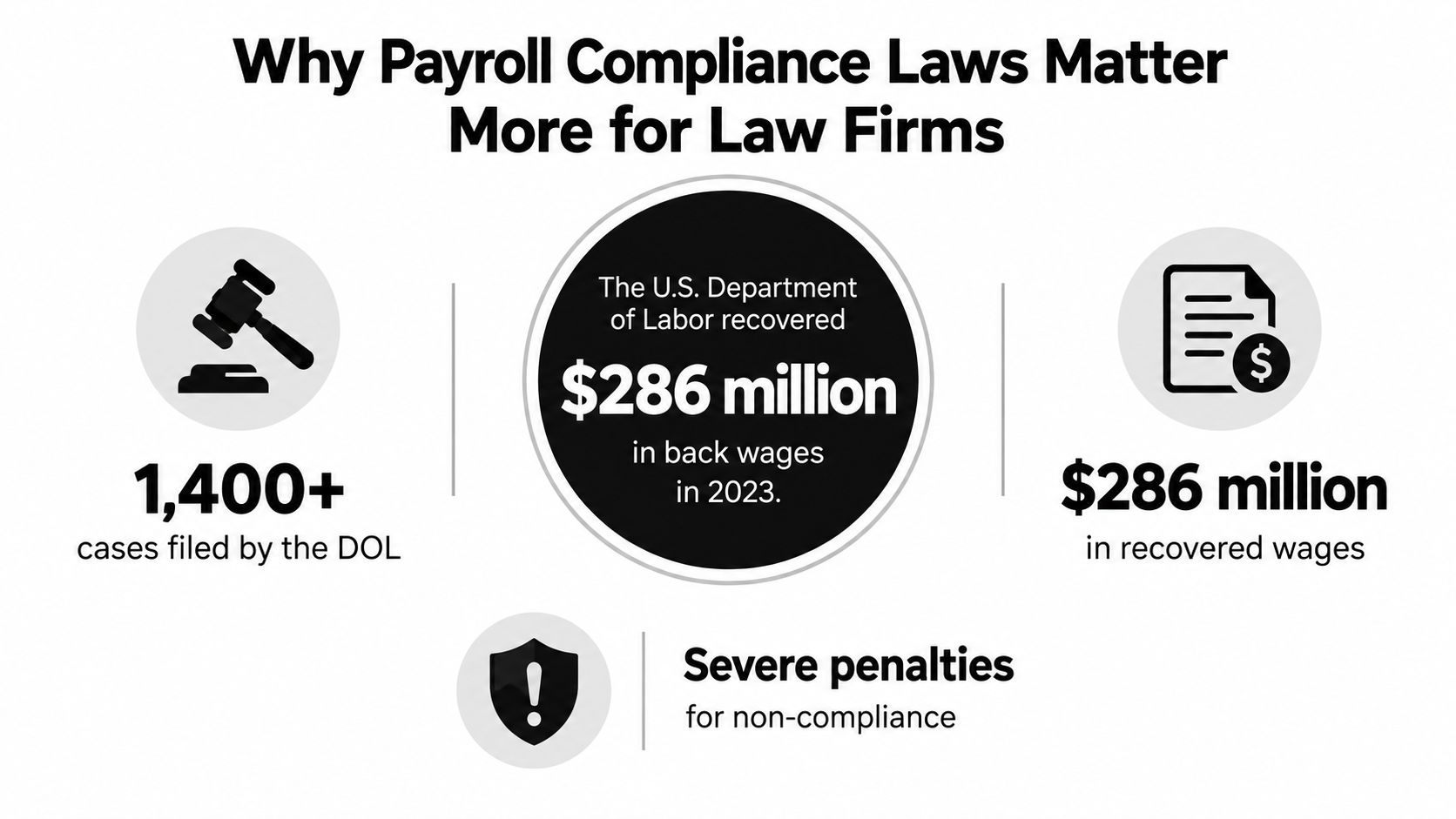
More than $259 million in back wages was recovered for nearly 176,957 employees through the U.S. Department of Labor's Wage and Hour Division in fiscal year 2025, making payroll compliance an ongoing business risk rather than a routine administrative task. For U.S. law firms, the answer is clear: treat payroll compliance laws as operational controls covering classification, wage calculations, tax deposits, filings, records, and the jurisdictions where remote staff work.
A firm may have attorneys, paralegals, legal assistants, intake coordinators, billing personnel, and remote healthcare or administrative support working under different arrangements. Each arrangement can create different obligations. Paying people on time is only the starting point. You also need accurate overtime calculations, lawful deductions, correct withholding, timely reporting, defensible records, and a process for identifying obligations when an employee works from another state or another country.
The practical challenge is that payroll risk rarely sits in one department. A managing partner may approve a staffing model, an office manager may provide work-location data, a payroll vendor may prepare filings, and a practice administrator may approve timesheets. If those handoffs aren't documented, a small error can become a wage claim, tax assessment, registration problem, or dispute about who was responsible.
The DOL's FY2025 enforcement data puts the issue in concrete terms. The agency reported more than $259 million in back wages recovered for nearly 176,957 employees, an average recovery of $1,465 per worker, and 16,924 concluded compliance actions during the fiscal year (DOL Wage and Hour Division enforcement data). That volume shows that wage-and-hour enforcement isn't limited to unusual disputes or large national employers.
Law firms face a distinctive operating pattern. A single practice may combine salaried attorneys, hourly paralegals, exempt and nonexempt administrative staff, contract lawyers, temporary intake personnel, and remote support workers. The firm may also handle matters in several states while employing staff who work from locations different from the firm's office. That combination creates more opportunities for classification errors, missed registrations, inconsistent wage rules, and incomplete records.
Payroll compliance laws govern the full payment process. A firm must calculate wages correctly, apply overtime rules where required, withhold and remit employment taxes, file required forms, preserve records, and make only lawful deductions. A payroll provider can process the transaction, but it can't automatically correct inaccurate worker classifications, incomplete work-location data, or an approval process that fails to capture actual hours.
A remote intake coordinator who works late during a surge in new-client calls may be entitled to overtime even if the firm regards the role as administrative. A paralegal who works across state lines may require a different withholding or unemployment-insurance review than a colleague who works exclusively in the firm's home state. An independent-contractor label won't resolve those questions by itself. A practical explanation of the underlying controls appears in this guide to what payroll compliance covers.

Operational rule: Treat every new hire, new work location, role change, and pay-structure change as a payroll compliance event.
The financial exposure is only part of the concern. Law firms sell judgment, confidentiality, and careful process. A payroll dispute can affect employee trust, management attention, and the firm's reputation with clients who expect disciplined handling of sensitive operations. If a firm can't reconcile hours, deductions, or tax filings, it may also struggle to respond confidently to an employee complaint or agency inquiry.
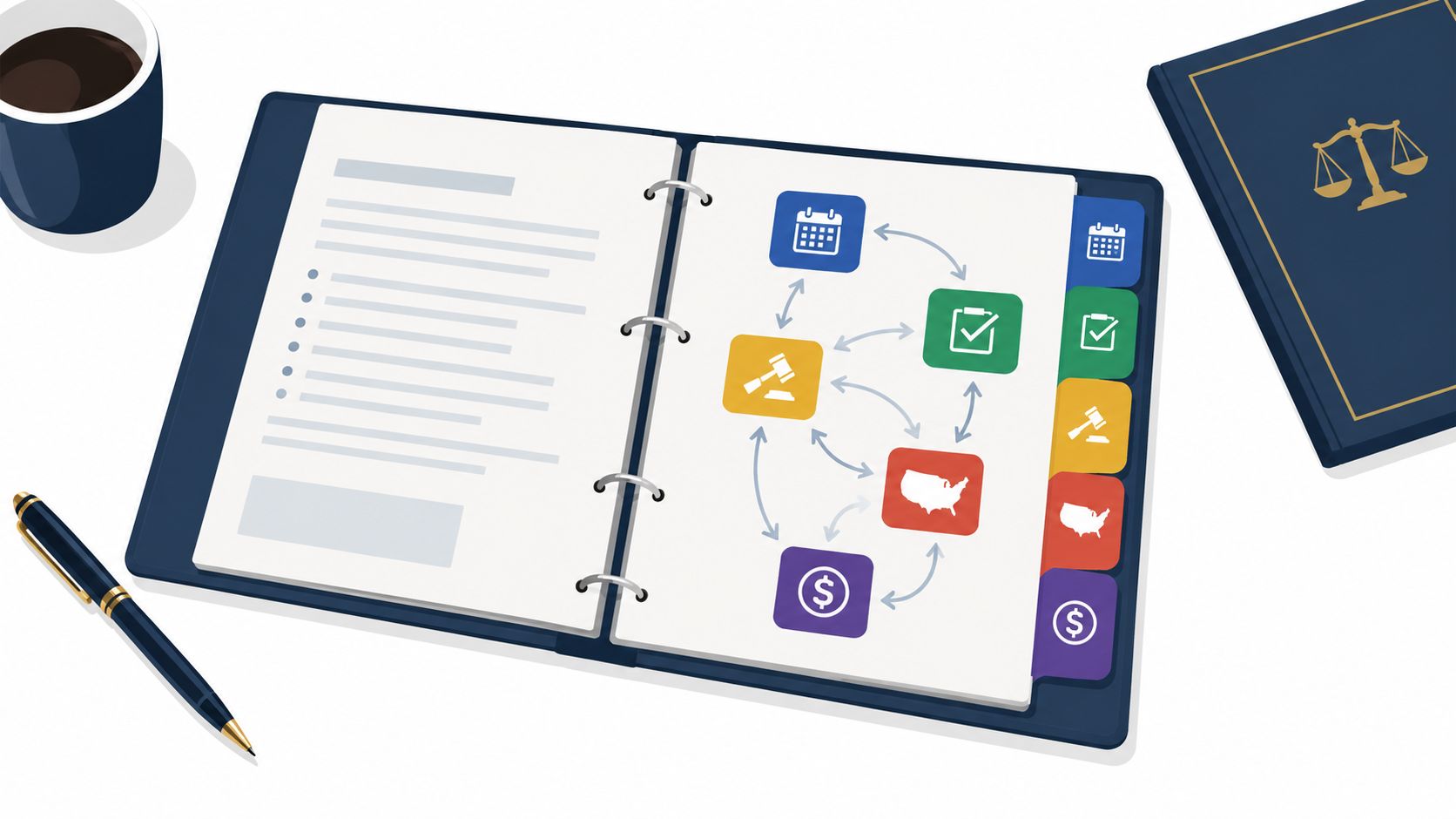
Federal payroll compliance combines tax administration with wage-and-hour enforcement. The IRS governs employment-tax deposits and filings, while the DOL enforces pay, overtime, and recordkeeping standards. A firm needs one calendar linking pay dates, time approvals, tax deposits, quarterly returns, annual reporting, and vendor confirmations.
The IRS deposit rule requires close monitoring. If an employer accumulates $100,000 or more in payroll taxes on any day during its monthly or semiweekly deposit period, the tax is due by the next business day. Late deposits can produce a failure-to-deposit penalty of up to 15%, according to the IRS analysis of employment-tax noncompliance.
That trigger can arise during an otherwise ordinary payroll cycle. A bonus run, rapid hiring, or payroll correction may change the tax balance and deposit deadline. The finance team should review the deposit schedule after unusual payroll activity instead of assuming the standard routine still applies.
Form 941 uses a quarterly filing cycle. Wages paid from January through March are reported by April 30, wages paid from April through June by July 31, wages paid from July through September by October 31, and wages paid from October through December by January 31. The IRS allows an extra 10 calendar days only if all employment taxes for the quarter were deposited timely and in full, as stated in the IRS Form 941 instructions.
The payment method should not determine worker status. First assess whether the person is an employee or independent contractor, then set the payment, reporting, and recordkeeping process. A contractor agreement records the parties' intent, but the actual working relationship and applicable law remain relevant.
A remote legal assistant who works set hours, follows firm procedures, uses firm systems, and performs an ongoing core function may present a different classification profile from a project-based specialist who controls the work and serves multiple clients. A documented review is safer than allowing an invoice to decide the issue. This resource explains the distinction between independent contractors versus employees.
Time records must capture actual work, including after-hours client messages, weekend document production, training, and time spent correcting firm-system problems. A rule against off-the-clock work does not resolve the risk if supervisors know work is occurring and payroll records omit it.
Assign an owner to each control. Before payroll is finalized, a firm representative should verify employee status, pay rates, time approvals, unusual adjustments, and the information supplied to the payroll vendor. The vendor can calculate and file, but the firm remains responsible for the underlying decisions.
Remote work changes payroll compliance from a single-state exercise into a location-sensitive process. Recent guidance emphasizes that remote employees remain subject to payroll rules in the same basic way as on-site employees, while the major exposure comes from jurisdictional triggers such as state tax nexus, withholding registration, unemployment insurance obligations, and cross-border work that may create permanent-establishment risk (guidance on federal payroll rules for remote employees).
A firm headquartered in New York may hire a remote paralegal who works from another state. That employee's work location can affect withholding, state registration, unemployment insurance, wage-and-hour rules, and required notices. The firm can't rely on its office address or the payroll vendor's default settings.
The review should capture where the person performs services, whether the location changes, whether the employee travels, and which entity pays and supervises the work. State rules differ, so a process that works for one remote employee may not work for another.
| Question | Why it matters |
|---|---|
| Where is the employee physically working? | The work location may trigger state registration, withholding, wage, or insurance duties. |
| Does the employee work across state lines? | The firm may need a process for tracking changes and allocating workdays. |
| Is the worker an employee or contractor? | Classification affects withholding, reporting, and employment protections. |
| Does the firm have a registered payroll presence? | Registration may be required before withholding or reporting can be handled correctly. |
A remote paralegal can create payroll and business-presence questions without being authorized to give legal advice. The employee may perform document organization, client intake support, scheduling, billing support, or administrative work under attorney supervision. Those boundaries should be written into the role description and access controls.
A firm should also assess whether a remote employee's activities create broader corporate tax or permanent-establishment concerns, particularly when the employee works across national borders or performs functions that go beyond routine support. The analysis is fact-specific, and counsel should confirm the firm's obligations before expanding into a new jurisdiction.
The weakest process is asking about work location only during onboarding. Employees move, travel, and adopt hybrid schedules. Require employees and managers to report a location change before it affects payroll, then route the change to payroll, finance, and compliance for review.
The same control applies to remote paralegals, billing specialists, and administrative staff. A practice manager who tracks only the person's home address may miss the place where services are performed.
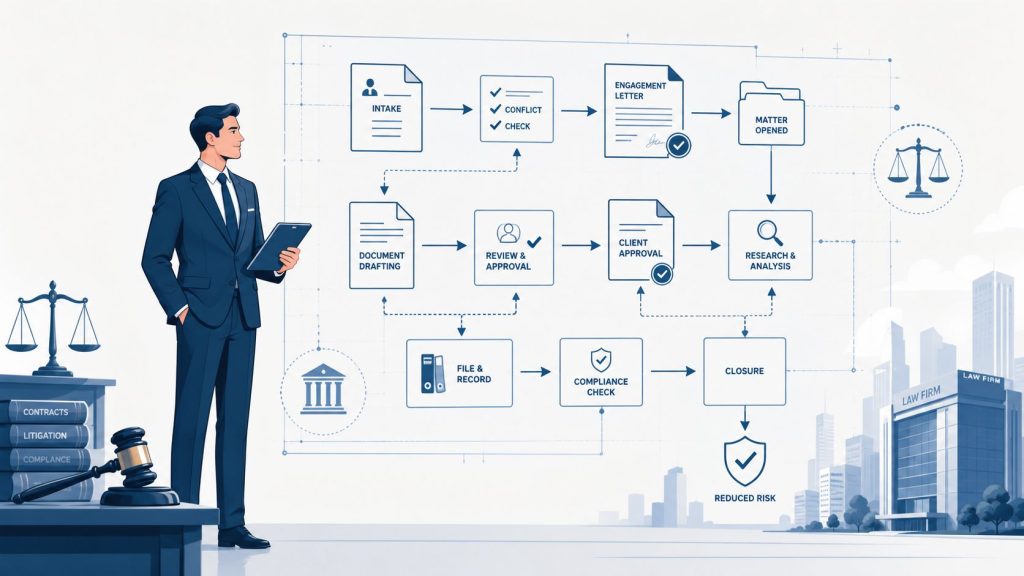
A reliable workflow gives each payroll obligation an owner and a review point. The firm doesn't need to handle every task internally, but it does need enough visibility to confirm that a vendor, professional employer organization, or co-sourcing partner has completed the work accurately and on time.
Begin with actual pay dates. Form 941 deadlines follow the quarter in which wages are paid, not the date a vendor invoice arrives. Add tax-deposit deadlines, state filing dates, annual forms, benefit deductions, garnishments, and internal approval cutoffs to the same calendar.
The calendar should identify a primary owner and a backup. A shared spreadsheet may work for a small firm, while a payroll platform or practice-management system may provide stronger reminders and audit trails. The tool matters less than the discipline of reconciling the calendar against the firm's real payroll schedule.
Before approving payroll, compare the payroll register with approved time records, compensation changes, bonuses, deductions, and the bank funding amount. Confirm that the vendor has prepared the required filings and that electronic submissions have a visible confirmation.
A vendor relationship reduces administrative work, but it doesn't eliminate oversight. The engagement agreement should state who calculates, who files, who funds deposits, who responds to notices, and who retains records.
For firms operating in California, a resource on California employer audit preparation can help managers think through documentation and reconciliation practices relevant to payroll-related reviews.
Review manual checks, retroactive rate changes, terminated employees, reimbursements, corrected time, and new-state employees separately from ordinary payroll. These exceptions receive less benefit from automated routines and deserve documented approval.
Retain payroll registers, time records, tax filings, deposit confirmations, worker-classification analyses, location reviews, deduction authorizations, and vendor correspondence in a controlled repository. In the UK context, payroll guidance commonly recommends retaining records for at least six years to support wage-dispute defense, while tax requirements can differ (UK payroll workforce compliance guidance). U.S. retention periods vary by record type and jurisdiction, so confirm the applicable schedule with counsel.
Hiring remote legal support in Latin America can expand access to bilingual English and Spanish professionals, U.S.-aligned working hours, and candidates familiar with law-firm workflows. It also changes the compliance analysis. A U.S. firm must examine the engagement structure, the worker's country, the services performed, payment records, local statutory obligations, and whether the arrangement resembles employment rather than an independent business relationship.
Start with a jurisdiction matrix. Record the worker's country, legal entity or provider involved, work location, role, reporting line, schedule, equipment, access to client information, payment method, and termination process. Then ask whether the arrangement requires local contracts, tax handling, social-security contributions, leave, bonuses, severance, or benefits.
A contractor-of-record or employer-of-record model may reduce some administrative burden, but it doesn't make the firm's responsibility disappear. The firm still needs to understand who employs the person, who handles statutory reporting, how client confidentiality is protected, and what happens when the relationship ends.
A Latin American paralegal or legal administrative assistant may support document preparation, research organization, calendaring, intake, billing, or case-management administration. The person should not diagnose clients' legal positions, provide unsupervised legal advice, independently make legal decisions, or perform licensed work that the jurisdiction reserves for authorized professionals.
The firm should use least-privilege access, written supervision rules, confidentiality terms, and a documented escalation path. Those controls address both operational quality and the risk created when remote workers handle sensitive client information.
For a more detailed operational reference, firms can review international payroll best practices. Managers who live or work abroad may also need reliable access to tax correspondence, making practical guidance on how to get IRS mail overseas relevant to the broader administration process.
Ask a staffing or payroll provider to identify the employing party, describe its compliance responsibilities, explain how records are stored, and provide a process for handling worker complaints or government notices. Request sample reports and contract language for review, not just a general statement that the arrangement is compliant.
HireParalegals is one option firms may evaluate for pre-vetted LATAM legal talent and payroll-management support. The firm should still conduct its own legal, privacy, classification, and vendor-due-diligence review before adopting any cross-border model.
Job titles don't determine overtime status. A law firm may call someone a “senior legal assistant,” “practice coordinator,” or “executive paralegal,” but the exemption analysis depends on the applicable salary and duties requirements, as well as state law.
For federal overtime purposes in 2026, the Department of Labor restored the white-collar salary level to $684 per week, or $35,568 per year. The highly compensated employee threshold is $107,432 annually, with at least $684 per week paid on a salary or fee basis (DOL 2026 overtime announcement).
A worker may need to satisfy the salary basis, salary level, and applicable duties test. The duties analysis asks what the employee does, not what appears in the offer letter. A paralegal who exercises substantial discretion in specialized legal work may require a different analysis from an administrative assistant who follows established procedures.
An intake coordinator who screens calls, gathers information, and routes matters may still be nonexempt. A remote billing specialist who works beyond scheduled hours during month-end close may also require overtime tracking. A junior attorney's professional status doesn't justify ignoring timekeeping, especially where state requirements or the firm's compensation structure create additional obligations.
| Role | Questions to document |
|---|---|
| Paralegal | Does the employee perform specialized legal work, and what level of discretion is exercised? |
| Legal assistant | Are duties primarily administrative and process-driven, or do they involve recognized exempt responsibilities? |
| Intake coordinator | Does the role involve scripted information gathering, or independent judgment with meaningful authority? |
| Billing support | Are hours tracked during closing periods, corrections, and client-invoice deadlines? |
| Junior attorney | Does the compensation structure and actual work support the claimed exemption under federal and state rules? |
Managers should review the role when duties change, not only when compensation changes. A support worker who begins supervising others, handling client escalations, or taking on specialized responsibilities may need a fresh analysis. Conversely, expanded responsibility doesn't automatically create exempt status.
The assumption that payroll problems are harmless if corrected later is dangerous. Timing, filing accuracy, wage calculations, and withheld-tax handling can each create separate exposure, and the people responsible for decisions may face personal consequences.
Failure-to-deposit penalties can range from 2% to 15%, depending on lateness. Failure-to-file penalties can reach 5% per month, up to 25%. The Trust Fund Recovery Penalty can impose personal liability for the full amount of unpaid trust-fund taxes on responsible individuals, while wage-hour violations may add liquidated damages of up to twice the back wages owed (technical payroll compliance exposure points).
The firm should document who approves payroll, controls bank access, reviews tax deposits, signs filings, authorizes deductions, and responds to government notices. Delegating processing to a vendor doesn't necessarily resolve responsibility if partners or managers retain authority over the underlying funds and approvals.
A breakdown often occurs when the firm receives a notice and assumes the vendor will handle it. Assign notice ownership, require escalation, and preserve the response record. The same process should apply to state unemployment notices, withholding inquiries, wage complaints, and corrected filings.
When the firm discovers a problem, freeze assumptions and establish the facts. Identify affected pay periods, workers, jurisdictions, filings, deposits, and deductions. Then involve payroll counsel or a qualified tax professional to determine correction steps, communications, amended filings, and potential payment obligations.
Practical rule: An undocumented correction is difficult to defend. Preserve the original record, the analysis, the approval, the filing evidence, and the final resolution.
The firm should also test whether the error reflects a system problem. If a remote employee's work location was never captured, correcting one employee's withholding won't fix the onboarding form. If managers approved off-the-clock work, a new reminder won't replace a timekeeping control and supervisor training.
Use this checklist as an operating control, not a one-time form. Assign each task to a person or vendor, set a review date, and retain evidence that the task was completed.
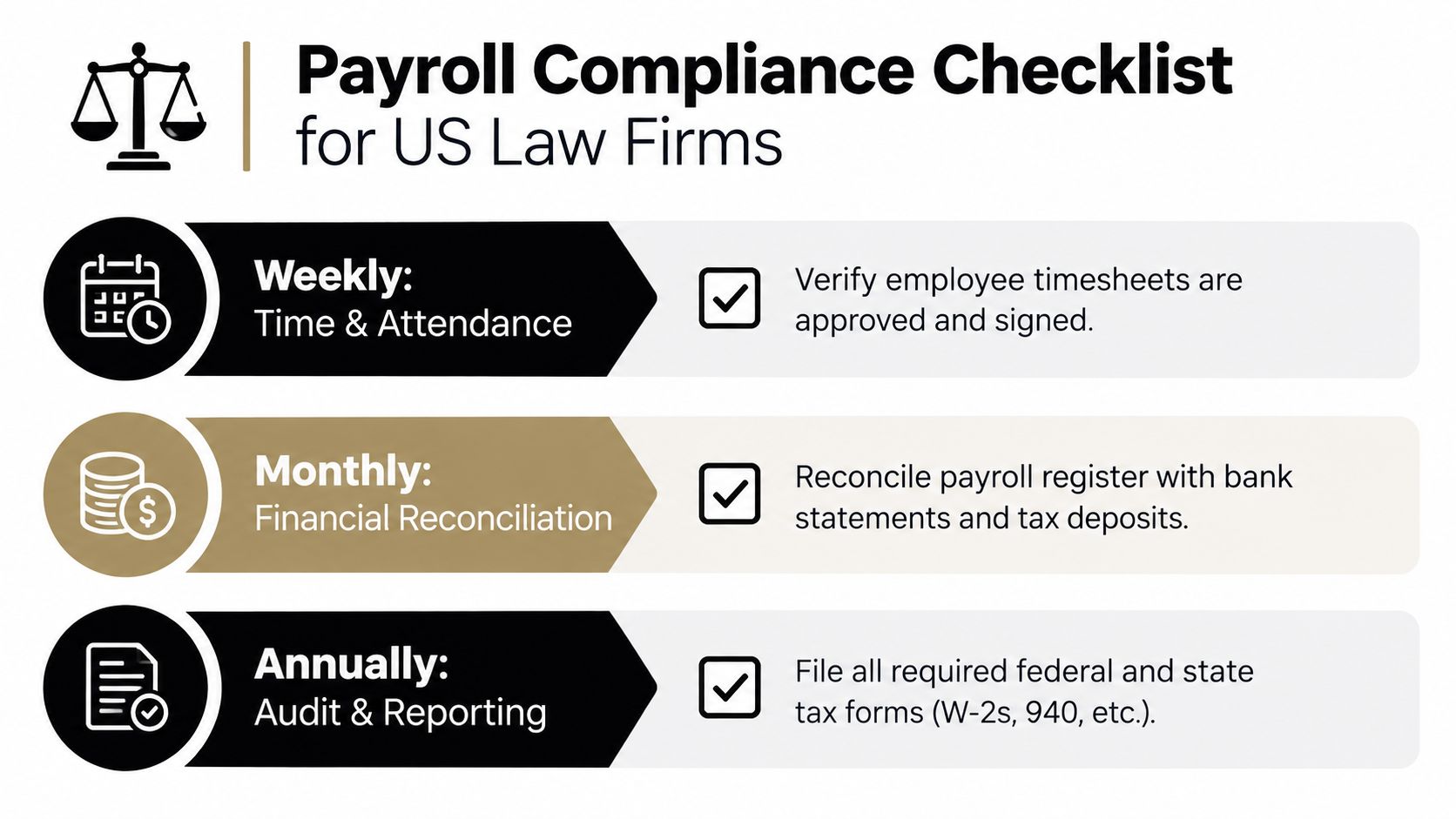
Payroll compliance laws require U.S. law firms to manage more than accurate paychecks. The firm needs a documented system for worker classification, overtime review, federal deposits, quarterly filings, state registrations, work-location changes, record retention, and vendor oversight.
Start by comparing your payroll calendar with actual pay dates and reviewing every remote worker's classification and location. Then test a recent payroll run against time records, tax deposits, deductions, and filing confirmations. Because state and cross-border obligations vary by facts, obtain qualified legal or tax guidance before expanding into a new jurisdiction or changing the engagement structure.
If your firm is evaluating remote paralegals, legal assistants, intake coordinators, or billing support, review the proposed role and jurisdiction before making an offer. Build the compliance controls into the hiring process, and speak with a qualified payroll or employment professional when the arrangement crosses state or national borders.